



What the cleaning experience is like and how clean our teeth felt after brushing.
How well it cleans Score SummaryWhat the brush is like in-hand; how grippy it is, what the balance is like, how easy it is to remove brush heads.
How it feels Score SummaryDoes the brush have our recommended features of a timer, pacer & pressure sensor and how well do they perform?
Recommended features Score SummaryHow long does the battery last, how long does it take to charge and does the brush have a battery level indicator?
Battery performance Score SummaryWhat are the total ownership costs over the space of several years and how expensive are replacement brush heads?
Price Score SummaryHow easy is it to clean the brush, how noisy is it, does it come with a travel case or any other useful items?
Additional items & features Score SummaryHow long is the warranty, what is the manufacturer's reputation and how strong are its environmental efforts?
Support & reputation Score SummaryApplies to smart toothbrushes only. How well does the smart technology work and how useful is the app?
Smart features Score SummaryOur verdict


There is little to fault about the Series 6100. It’s a solid mid-range brush with a strong implementation of the key features we recommend for an electric toothbrush.
The battery life is excellent. It has a sensible variety of cleaning configurations and not so many that you are overwhelmed by choice.
Most importantly, it does its main job — cleaning the teeth — very well.
If it's no more than £20 extra, the version with the travel case is worth going for.

Pros |
Cons |
|---|---|

Good range of cleaning intensities |

Sensitive brush heads are expensive |
|
Excellent battery life |
How well it cleans
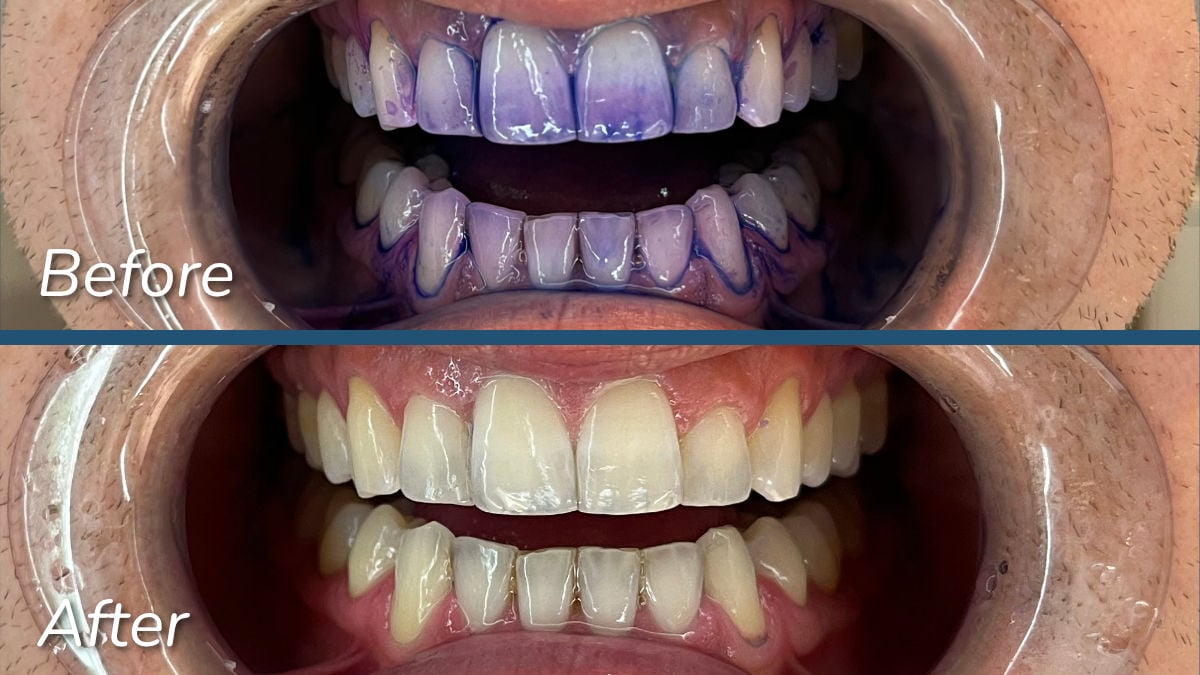
The Series 6100 scores full marks in this category because, assuming you use it with the correct technique, it will clean your teeth superbly.
As you can see from the photos I’ve included of my disclosing tests below, it removed virtually all the plaque from my teeth.
The 6 cleaning configurations are good for sensitivity
The 6100 comes with two cleaning modes — standard and sensitive. Given a choice of only two modes, these are the ones I would opt for.
On top of the two cleaning modes, you then have three intensities available for each, thus giving six configurations in total. This is the upper limit of what I would say is a helpful amount of choice. Any more than that and things can become a bit overwhelming.
Truthfully, having one cleaning mode is enough for most people, but even if you only suffer from occasional sensitivity, having extra options is helpful.
Sensitive mode already reduces the intensity of the bristle movement compared to standard mode, so with the three intensity options for each, you essentially have a scale of six intensities to choose from.
The 6100 is a worthwhile investment if you really suffer from sensitive teeth and gums. You can address this even further by opting for a sensitive brush head, one of which is included in the box.
The cleaning modes and intensities are one of the main things that differentiate the 6100 from the other models in the range. You can find out more about how they compare in our comparison here, which also goes into more detail about cleaning modes vs intensities.
Compared to the two brushes lower in the range, the 5300 and 5500, the 6100 has a dedicated button for switching between modes and intensities, which is useful.
The new motor technology isn’t very noticeable
All of the models from Sonicare’s late 2024 range feature “next generation” sonic technology, which is supposed to enable the motor to deliver more consistent power in tighter spaces of the mouth. This means that you put additional pressure on the motor, for example when it’s pressed against the cheeks as you brush your molars, the bristle movement is not reduced.
I can’t say that I could really tell the difference compared to older Sonicare models. Perhaps ever so slightly, but that could have been psychological on the basis of knowing it was there. I could certainly feel a consistent and strong power throughout the clean. It delivers 62,000 movements per minute.
If you have noticed the slowing of the motor on a previous electric toothbrush, you may notice the new technology more than I did.
How it feels
This is another high-scoring category for the 6100. For this range of brushes, Sonicare has drawn inspiration from its flagship model, the Prestige 9900.
The handle has a comfortable and solid feel with a matte finish and the materials used have a premium feel to them. It’s a nice brush to hold and use.
The handle has a well-balanced feel
Sonicare brushes are known for being comfortable to hold and having a premium feel, but the 6100 and the other new models from the range are another step up. They've clearly taken cues from the Prestige 9900, Sonicare's top-tier brush, which adds to the overall sense of quality.
The new handles are quite a bit larger than previous models, which adds a nice weighting to them. The 4100 Series, for example, is approximately 30 to 40% smaller and noticeably slimmer.
Whether this is an advantage or a disadvantage depends on your individual needs. If you have dexterity issues, the lighter and slimmer design might be beneficial, making it easier to hold than a heavier toothbrush.
Conversely, if gripping objects is challenging for you, you might prefer the larger handle of the 6100.
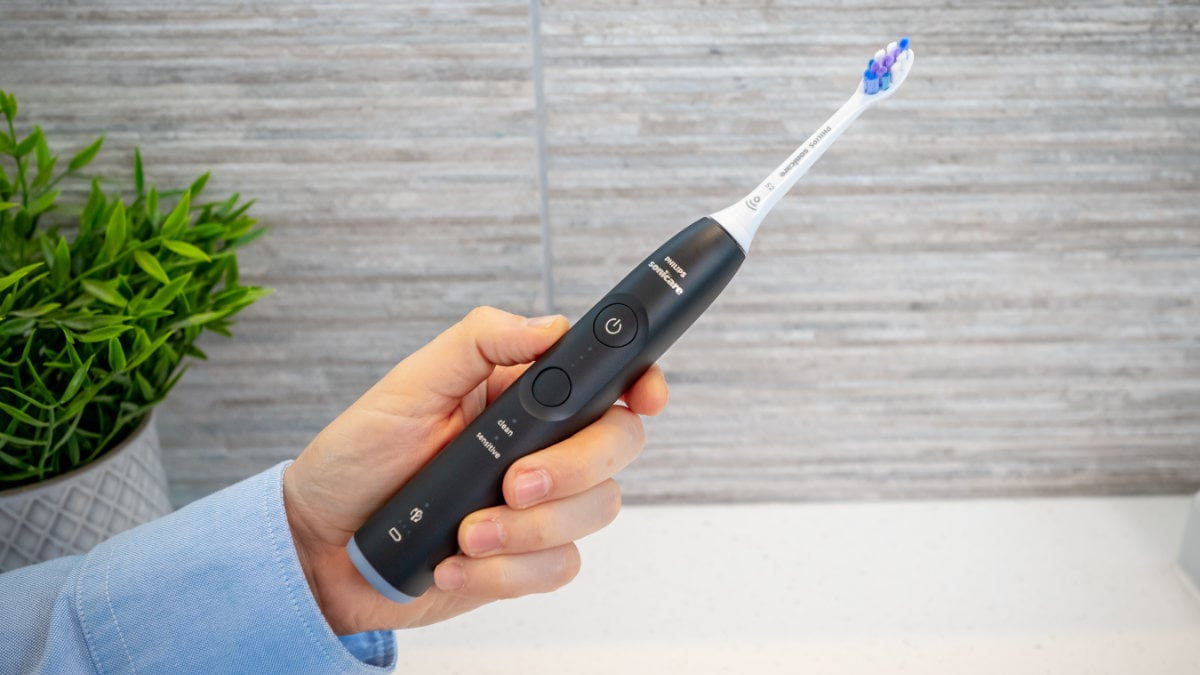
The buttons are easy to press
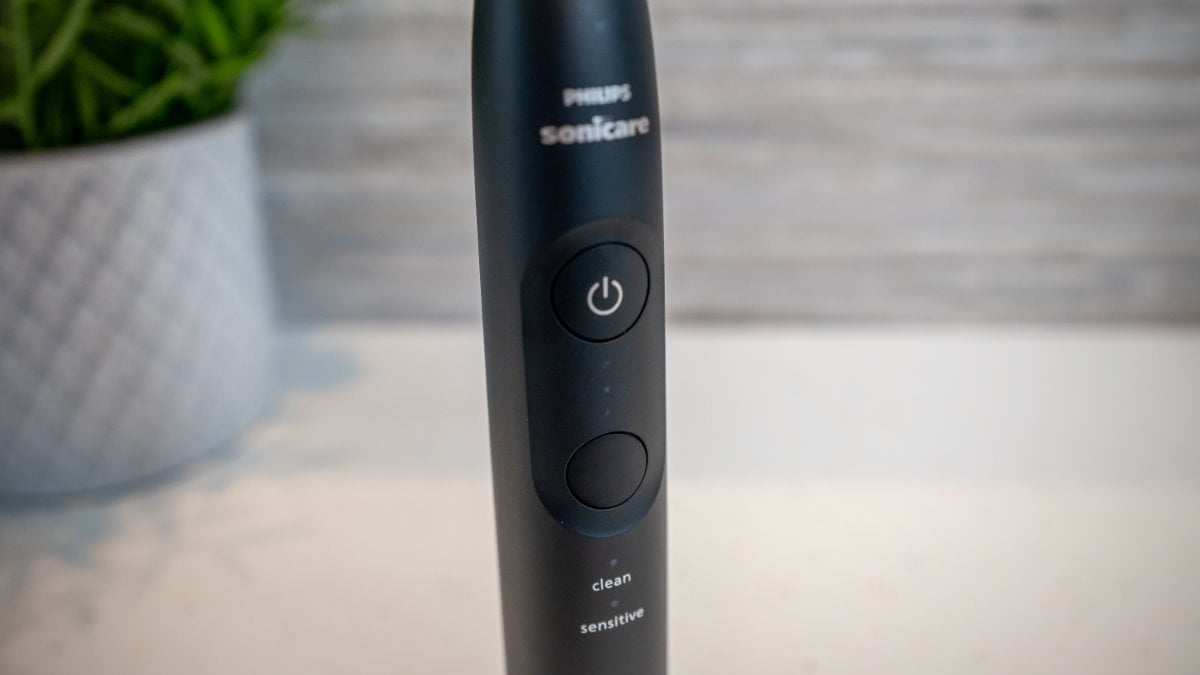
The 6100 has physical power and mode change buttons. When the brush is switched off, you use the lower of the two buttons to change modes. When the brush is powered on, you use it to switch intensities.
There are LEDs to show which mode and which intensity you have selected.
The buttons are easy to press, which is another useful thing to note if you have any pain in your joints.
The physical button design is a feature where the 6100 differs from some other Sonicare brushes like the Prestige 9900, which has a seamless button design.
By comparison, the Prestige button can be quite firm to press, potentially causing discomfort for those with thumb joint pain.
One downside of the physical button is the gap between it and the handle, which could be a spot for grime to build up. While I trust Sonicare’s quality control to have tested this, it seems like a potential issue.
The seamless button on the Prestige 9900 was introduced to solve this problem, which was evident in previous models.


Regardless of the model, I recommend rinsing your toothbrush briefly under the tap after each use to remove any toothpaste residue. This is an easy way to prolong the life of a brush.
It might seem trivial to delve this deeply into power button design, but small differences can significantly impact certain users. For example, the 4100 Series features a rubber-coated button with a textured power symbol, making it more noticeable. While not a seamless design, this could allow water and grime to collect under the rubber if not cleaned regularly. Still, this is a minor consideration.
Like many electric toothbrushes, the 6100 has a slight recess around the power button. This feature helps your finger find the button easily, and is particularly helpful for the visually impaired or if you’re using the toothbrush in darkness.
Recommended features
The 6100 has an almost perfect implementation of our most recommended features: a timer, a pacer and a pressure sensor. The pressure sensor, in particular, is impressive and is another feature that is useful for those with sensitivity.
Given this, and its range of cleaning configurations, the 6100 sits at the top end of brushes with our recommended features.
The pressure sensor alerts are easy to notice
There are several ways to implement a pressure sensor and, especially at this price point, Sonicare has done an excellent job with the 6100. Essentially you are given three different types of alert if you brush too hard: audible, visual, and tactile.
When the pressure sensor is triggered, there is a noticeable change in the sound of the motor. Additionally, there is a vibration that runs through the handle. This alert system alone is good enough and is what’s included with the 5300 and 5500, but the 6100 goes a step further and includes a very noticeable visual alert.
When you brush with too much force, a light ring on the bottom of the handle illuminates. I found this easy to spot out of the corner of my eye, but it’s even more noticeable if you’re brushing in front of a mirror.
Sonicare's implementation works much better if you are blind or partially sighted. The noticeable sound and vibration change trigger senses the competition's brushes don't. It's a small but significant difference. Brand's like Oral-B should be taking note.
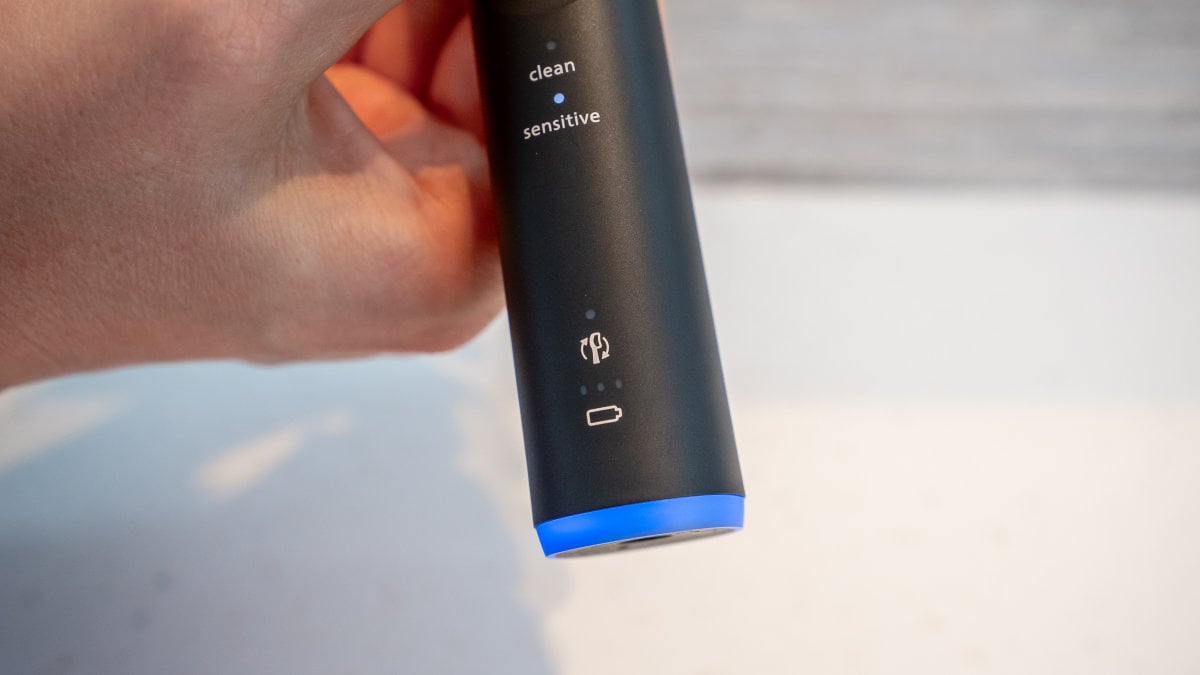
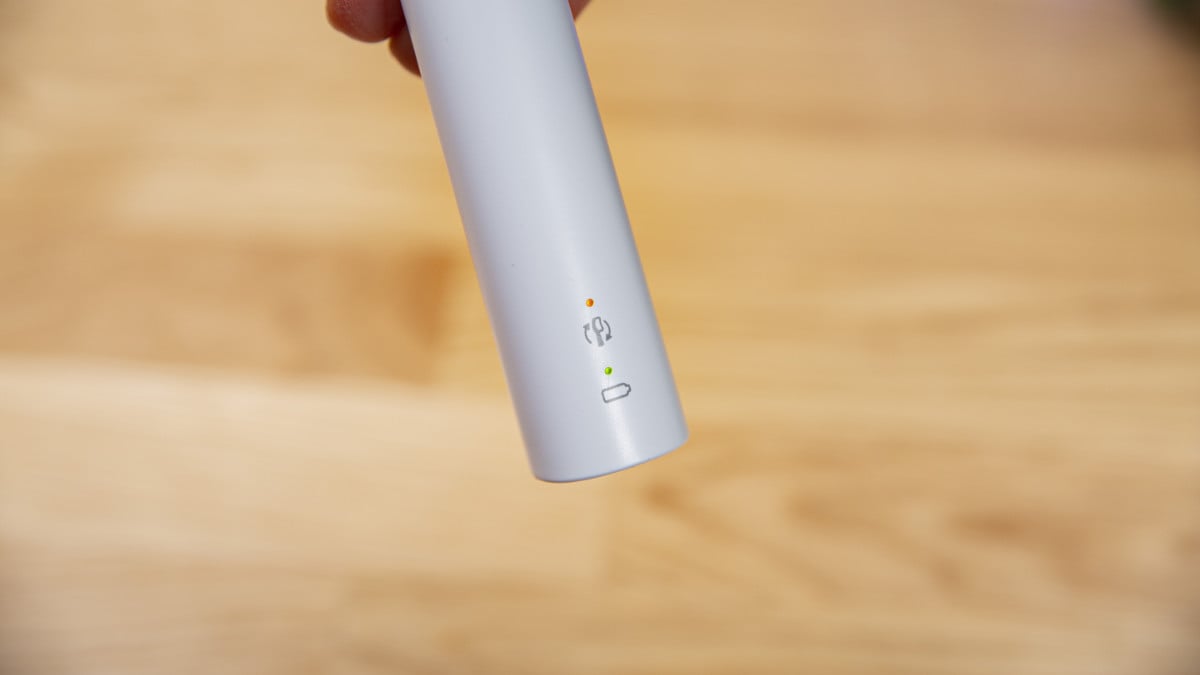
Technically, the 5300 and 5500 do feature a visual alert because the BrushSync head replacement LED lights up (as seen in the photo below), but its placement on the handle makes it very hard to see.
It's also worth noting that you have the option to turn off the pressure sensor. We do recommend leaving it on, but if for some reason you want to turn it off, the option is there. The same applies to Sonicare’s EasyStart, which helps ease you into using an electric toothbrush by gradually increasing brushing power over the first 14 sessions.
If you're already familiar with electric toothbrushes, you might prefer to disable it. These subtle features contribute to the overall user experience and help justify Sonicare's slightly higher price.
Auto power off and sextant pacing
Like most Sonicare brushes, the Series 6100 automatically powers off after 2 minutes of brushing. This helps you to know that you’ve brushed for the minimum recommended time.
The pacing feature divides the mouth into 6 zones, prompting you to brush each area for 20 seconds, as opposed to the traditional method of 4 zones for 30 seconds each.
If you stick to the pacing guide, using the 4 zones for 30 seconds each might be slightly more convenient, but in reality, the difference is minimal. What’s crucial is ensuring that you brush all your teeth evenly.
Additional items & features
The 6100 Series doesn’t score quite as highly in this category. That's not necessarily a bad thing. It keeps its price down because it doesn’t include unnecessary bells and whistles.
It has an excellent implementation of the main features we recommend, plus a couple of nice touches that help it to stand out from similar brushes. In the sections below I comment on those features and considerations that are not included within our other review categories.
It’s quiet
I recorded the 6100 noise level at 63dB during testing. Whilst that’s not the quietest among Sonicare's brushes, it’s still very quiet overall. In comparison, the Oral-B Pro 3 3500 is 10dB louder at 73dB. Oral-B brushes can sound a little more rattly than the gentle hum of a sonic toothbrush.
Overall, though, the noise of an electric toothbrush isn’t a big consideration unless you really need to keep sound disturbance to a minimum.
|
Philips Sonicare 4100 Series
|
|
Philips Sonicare Series 5300
|
|
Philips Sonicare Series 5500
|
|
Philips Sonicare Series 6100
|
|
Oral-B Pro 3 3500
|
It’s easy to clean
The Series 6100 is an easy brush to wipe or rinse clean. Its smooth handle design doesn’t have any raised or textured surfaces or rubber grips that might degrade over time.
The lack of rubber grips or textured surfaces hasn't posed any issue with keeping a good hold of it in my hand.
As mentioned earlier, I recommend paying extra attention to the power button area; make sure you rinse it thoroughly to avoid toothpaste residue buildup.
Whilst the gap between the power button and handle doesn't allow water inside the device, if residue dries in there it could be difficult to clean out should it build up.
The beeps and LEDs are helpful
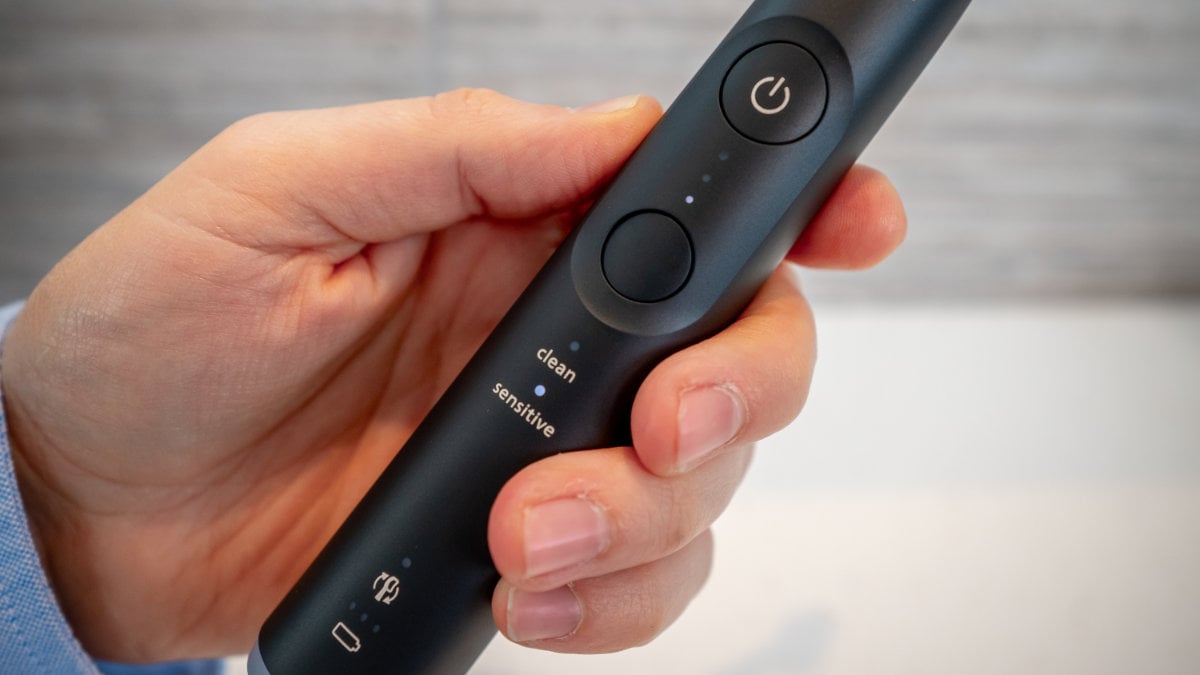
There are various LEDs on the handle of the 6100 to provide you with information. These are clearly laid out and aren’t so numerous that they overwhelm the design.
Starting from the top of the brush, there are three LEDs between the power and mode change buttons that descend in size and show which intensity is selected.
Below the mode change button there are labelled LEDs for the cleaning modes. Towards the bottom of the brush there is the BrushSync LED, which tells you when it is time to change the brush head.
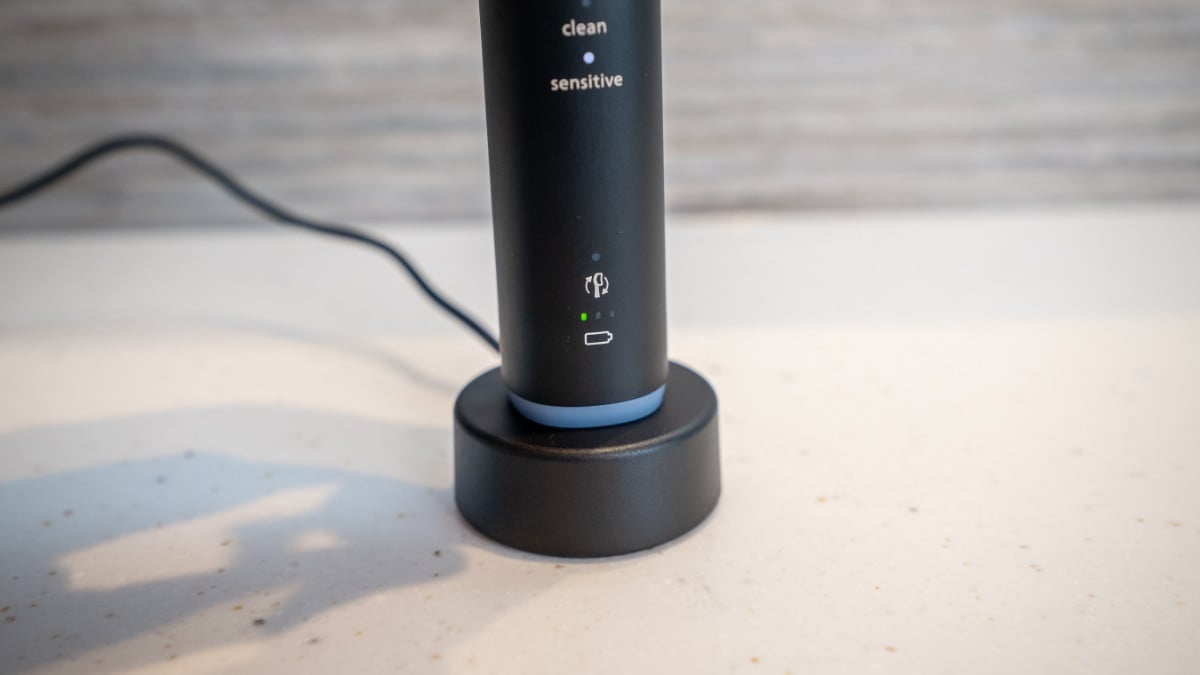
Then below this there are three LEDs that make up the battery status indicator. Some other Sonicare brushes only have a single LED here. I do find having three is useful because it gives more warning when the battery is getting low. It’s hardly a critical feature, but it’s a small enhancement nonetheless.
Another nice touch that the 6100 (and most other Sonicare brushes) includes is an audible beeping pattern and a small vibration when the brush is low on power and placed on the charging stand. It’s a minor feature, but for the partially sighted it’s an extra indication that the brush has been successfully placed on charge.
The travel case version is worth it if it’s no more than £20 extra
With the way Sonicare pricing and availability works, you may sometimes see a vast difference in price between retailers and variants. It really depends on the deals running at the time.
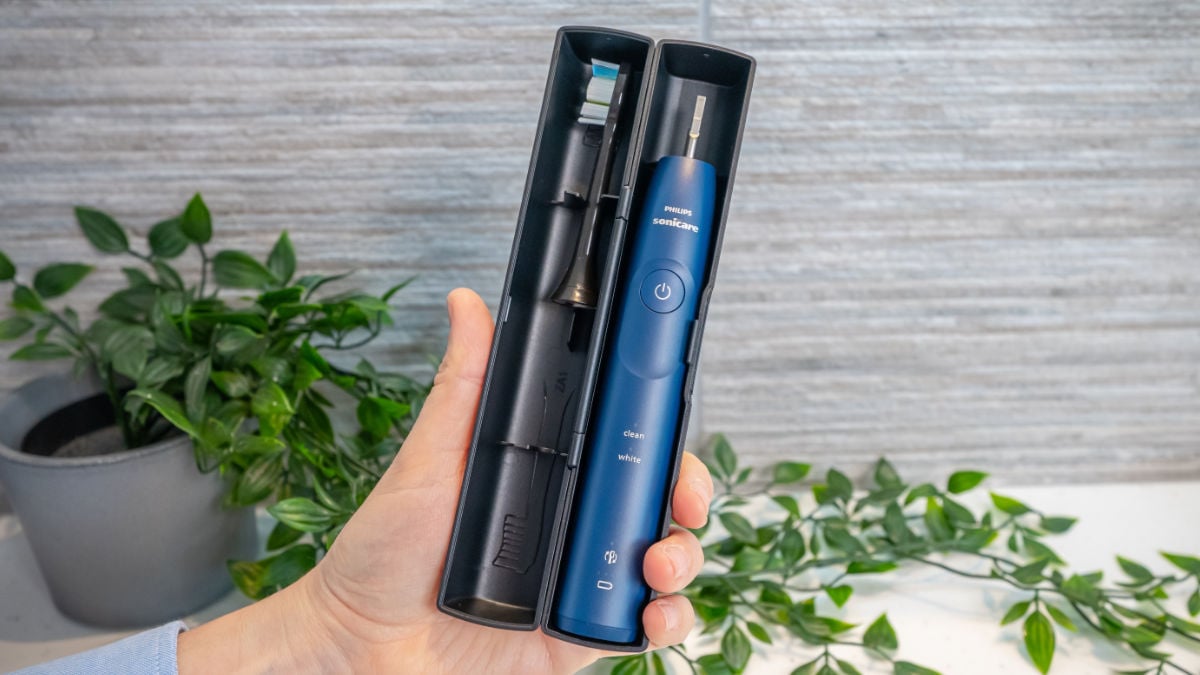
There is a version of the 6100 that comes with a travel case. £20 extra is the upper limit of what I would pay for it.
It’s not bad for what you get, but it is just a bit of plastic. It's a basic and lightweight case that's square in design. It holds the handle and up to two brush heads and clips together rather than being magnetic. It’s perfectly functional.
While it might come apart if dropped on a hard surface, this isn't a major concern and it would still protect the brush. If you often take your toothbrush away with you, it’s useful to have, but not if you need to pay £40 or £50 for it.
You can buy a charging travel case for it separately
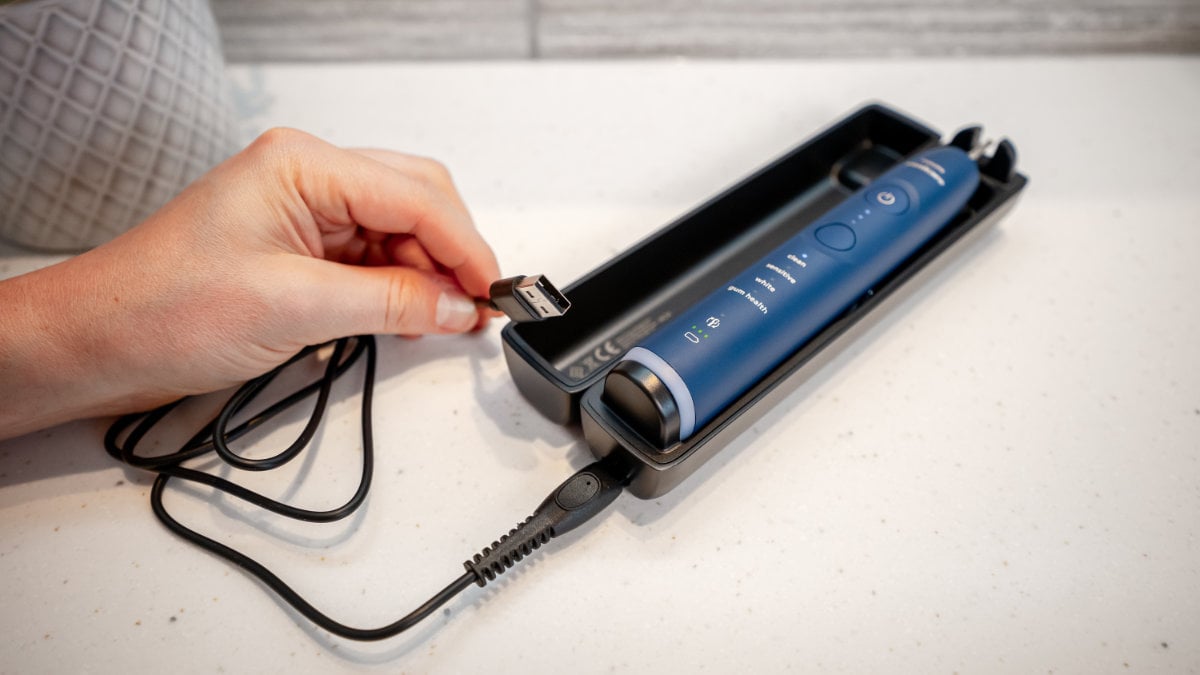
It's worth mentioning that other models, like the Series 6500 and 7100, come with a similar case that can charge the toothbrush while it's inside. This case is also compatible with the Series 6100 and costs around £20 from Philips at the time of writing.
For frequent travelers, this feature offers a convenient way to keep your toothbrush charged on the go. That being said, the 6100 achieved 48 days battery life during my testing, so if you fully charge it before your trip you might not need to recharge while you're away.
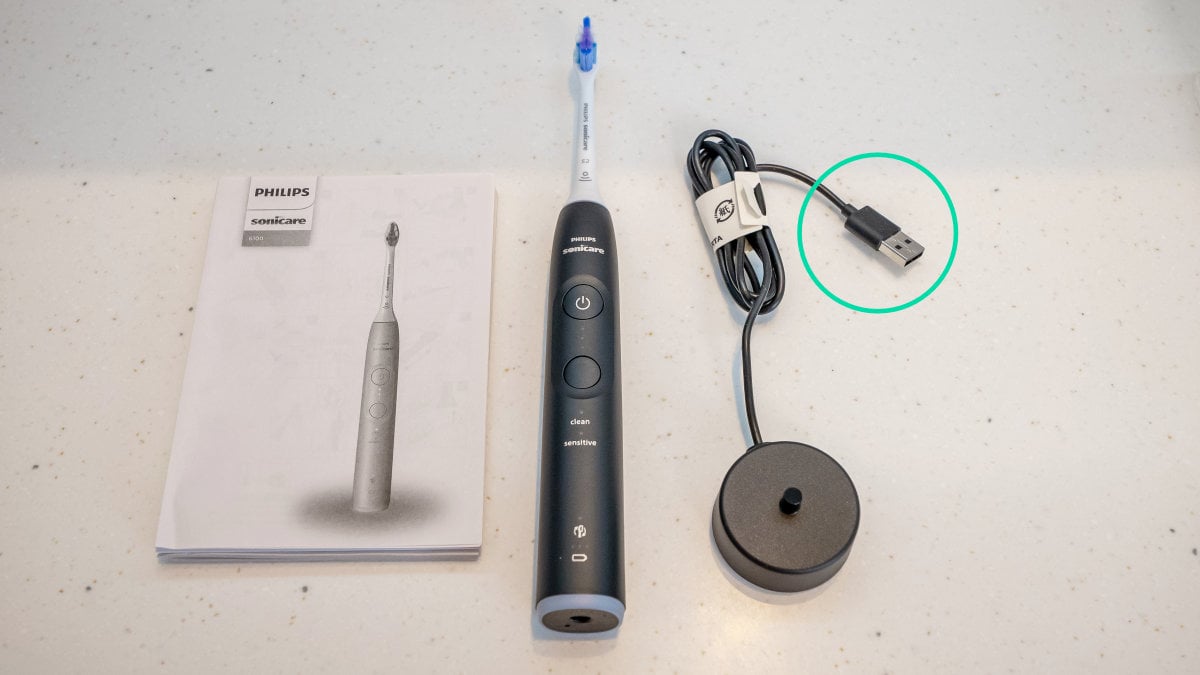
It's important to note that the charging travel case uses a detachable USB-A to proprietary 2-pin connector, meaning it can't be charged with a USB-C phone charging cable like some cases, such as SURI. The charging stand included with the Series 6100 uses a USB-A connection, making it compatible with phone chargers that have a USB-A port, which many now do.
It’s BrushSync compatible
The 6100 doesn’t have any smart features, but it is BrushSync compatible. This means that if you use BrushSync-compatible heads, the BrushSync LED notifies you when it’s time for a replacement. BrushSync heads are more expensive, so if you're budget-conscious, you might prefer sticking with regular heads. The 6100 is compatible with both types.
The 6100 doesn’t have mode pairing, which matches your brush head with the optimal cleaning mode. You’re not missing out much — there isn’t much noticeable difference between the various heads and modes, and there are only two modes to choose from on the 6100 anyway. Mode pairing isn’t a feature I would seek out. For more detail, check out our post on the best Sonicare brush heads.
The effort required to pull brush heads off is about right. Sometimes it can feel a little stiff when removing a head from the 6100, but that is the case with many electric toothbrushes.
Battery performance
The 6100, and the other brushes in Sonicare’s new range, have seriously impressive battery life, so it scores high marks here. An additional bonus is that the battery is fairly easy to replace, should you need to further down the line.
48 days of battery is excellent
Sonicare quotes a 21 day battery life for the 6100, but in my own hands-on testing it averaged 48 days, which is quite the difference. 48 days is among the best battery life I’ve recorded for an electric toothbrush.
This is one of the key differentiators between these newer brushes and some of Sonicare’s older models — the battery is larger. It means you have to charge less often to get more usage from them, which could be a key factor if you’re deciding between two models. To give a comparison, I measured the 4100 Series battery at 17 days, which isn’t bad, but a difference worth considering if you prefer to not have to charge your brush too often.
|
Philips Sonicare Series 5500
|
|
Philips Sonicare Series 6100
|
|
Philips Sonicare Series 5300
|
|
Oral-B Pro 3 3500
|
|
Philips Sonicare 3100 Series
|
|
Philips Sonicare 4100 Series
|
The battery is user replaceable
Whilst Philips Sonicare doesn’t specifically state this in the manual, nor is it recommended unless you really need to, the battery is user replaceable. I went through the process (video here) and found it's fairly straightforward using a Torx screwdriver and a Philips screwdriver. The advantage of this is that if your battery becomes depleted after, say, five years of use, you can theoretically replace it yourself with minimal trouble and expense.
In the base of the handle you have a Torx screw, which can be unscrewed so that you can fairly easily pull off the base cap. Then, by applying a bit of pressure to the spindle at the top of the handle, push down and the internals will slide out. You have to be careful of the spring popping out. It’s a 750 mAh battery.
Three bars for battery feedback is more helpful
The battery status indicator on the front of the 6100 has three bars to it, which is more useful than other comparable brushes that have a single LED or none at all.
It's this sort of extra touch that pushes the price up slightly, but enhances the user experience. You don't need it, but it adds convenience.
Like most other new Sonicare brushes, the 6100 uses the new USB connected charging stand.
The time it takes to give the battery a full charge is up to 24 hours, as is typical with Philips Sonicare brushes, but with over a month's usage time that can be excused.
Price & buying advice
For what it offers, the 6100 is fairly priced. It sits at the higher end of our recommended range for brushes that strike a good balance between features and cost.
This means that you can get those features (a timer, a pacer and a pressure sensor) cheaper in another brush, but the 6100 does offer a more complete offering and warrants the higher price.
For example, our recommendation for the best budget electric toothbrush is the Pro 3 3500. Like the 6100, it has a sensitive and standard clean mode. It has a visible pressure sensor, a timer and a pacer. At the time of writing it was almost half the price of the 6100, plus its replacement heads are cheaper.
By comparison, the 6100 has 6 cleaning configurations, providing a broader range of intensity options. It has an additional pressure sensor notification in the form of a vibration alert. It has longer battery life, more notification LEDs and it’s quieter.
Both brushes have the key features we recommend and both clean your teeth very well. If any of the extras of the 6100 stand out to you, or if you suffer from sensitivity, that may be the best choice. Otherwise going for the Pro 3 will save you some money and it still does a great job.
From Sonicare’s new 2024 range, the 5300 and 5500 are similarly priced and spec’d to the 6100. The main differences are the cleaning configurations and the visible pressure sensor. If you’re choosing between the three, if the 6100 is no more than £20 more expensive, it’s worth going for.
Otherwise, the situation with the 5300 and 5500 is similar to the one I have described above with the Pro 3 3500. They also have the key features and do an excellent job.
If one brush is much better priced than the other, it’s worth going for that one.
| Overall Score |
| How well it cleans |
| How it feels |
| Recommended features |
| Additional items & features |
| Battery performance |
| Smart features |
| Price |
| Buying options |
|
|

|

|

|
|---|---|---|---|
|
85
|
82
|
85
|
79
|
|
100
|
100
|
100
|
100
|
|
88
|
88
|
88
|
76
|
|
82
|
82
|
82
|
82
|
|
62
|
42
|
62
|
24
|
|
80
|
80
|
80
|
53
|
| - | - | - | - |
|
57
|
57
|
43
|
100
|

Support & reputation
The Series 6100 comes with a two-year warranty, which is the standard for electric toothbrushes in the UK. It feels well-built and based on my previous experience with Sonicare brushes, I would expect it to last well beyond the warranty period.
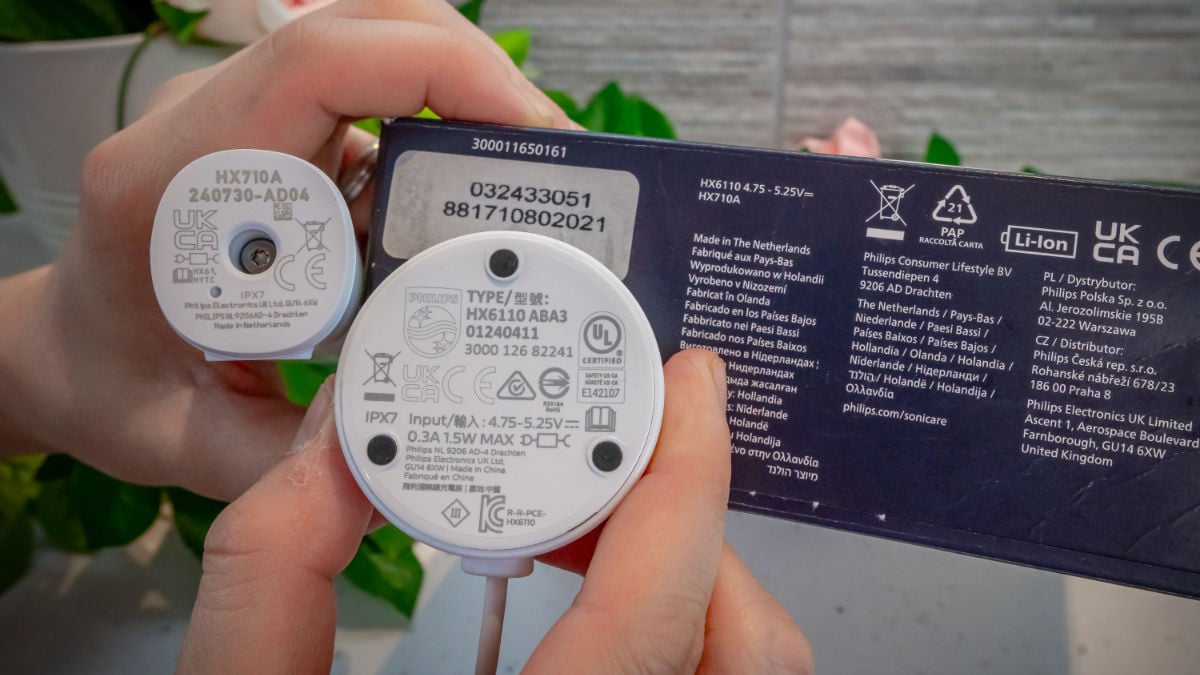
Something worth pointing out is that the brush handle and packaging state that it is made in the Netherlands, while the charging stand is marked as made in China. This is not unique to this range of brushes, but it’s clear that parts of its components are likely manufactured in China. Although the final assembly may occur in the Netherlands, a significant portion of the brush is probably produced in China.
This situation is common with many products, but if the origin is particularly important to you, it's something to keep in mind.
The battery is user-replaceable, which is something that can’t be said of all modern electric toothbrushes. This means that if it loses capacity after several years, you should be able to replace it yourself. This extends the lifespan of the brush, saving you money over the long term and reducing its environmental impact.
Environmental impact
We don't assign a score to this section because it's challenging to evaluate accurately without comprehensive data on manufacturing and shipping processes.
However, based on our understanding of the environmental impact of electric toothbrushes, here are some specific comments about the Sonicare Series 6100:
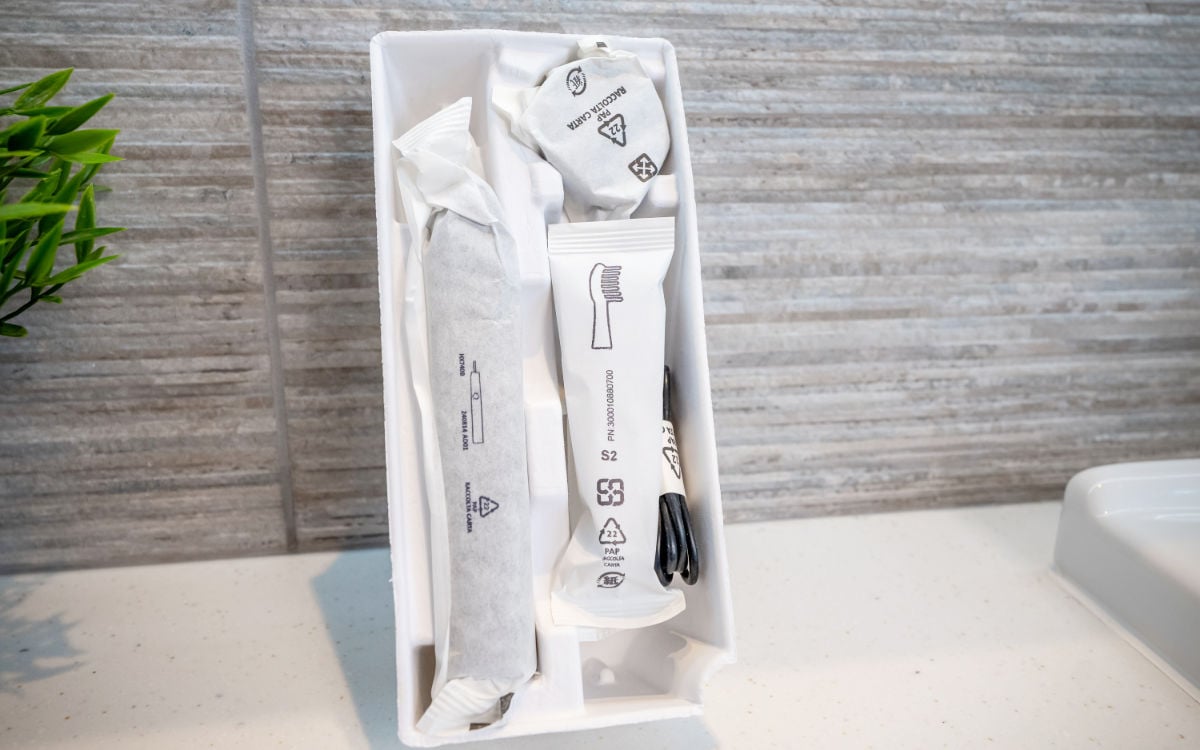
Firstly, its packaging is made of paper and cardboard instead of plastic. While this is a relatively small factor, it's a positive step away from single-use plastic, which is a gripe I've raised before.
According to product listings on the Sonicare website, some of its brush heads are now made from 70% bio-based plastic. Although it's still plastic, bio-based alternatives are preferable to petroleum-based plastics as they make use of renewable resources instead of finite ones.
In the past Sonicare has partnered with Terracycle for recycling brush heads, but that scheme has now been discontinued. We would like to see it introduce its own recycling program to help manage the waste it produces. SURI is an example of a manufacturer that has implemented this.
The 6100 doesn’t include smart features, meaning that it uses fewer components than a smart toothbrush, reducing its overall impact. However, Sonicare BrushSync heads contain an RFID chip, making them more resource-intensive and wasteful than regular, non-BrushSync heads.
The charging stand has an internationally accepted USB type A connector on the end, rather than a country specific power adapter. It isn't specific to this model and can be used by most other Sonicare handles. The design makes it more practical for international travel, reduces the number of stand versions and the total amount of material used. But, I acknowledge how some find the lack of fixed power adapter quite inconvenient.
Additionally, the battery is replaceable by the user, which makes it easier to extend the life of the brush — always a better option than purchasing a completely new one.
Conclusion
The Series 6100 features a thoughtful design that is a delight to use.
It does a fantastic job of implementing the basic features we recommend in a toothbrush, most notably pressure sensor alerts.
This makes it slightly more expensive than similar brushes, but particularly if you suffer from sensitivity, it’s worth paying that bit extra for.
Video review
See the video review below to find out more about my hands-on experience testing the Sonicare Series 6100.

Size guide
- Toothbrush height with head - 24cm / 9.4 inches
- Toothbrush height without head - 18cm / 7.1 inches
- Width - 2.8cm / 1.1 inches
- Depth/thickness - 3cm / 1.2 inches
- Weight with head - 123g / 4.3oz
- Weight without head - 118g / 4.2oz
- Package weight - 341g / 12oz
Noise
- 63dB
Country of manufacture
- Netherlands (handle) & China (charger)