







What the cleaning experience is like and how clean our teeth felt after brushing.
How well it cleans Score SummaryWhat the brush is like in-hand; how grippy it is, what the balance is like, how easy it is to remove brush heads.
How it feels Score SummaryDoes the brush have our recommended features of a timer, pacer & pressure sensor and how well do they perform?
Recommended features Score SummaryHow long does the battery last, how long does it take to charge and does the brush have a battery level indicator?
Battery performance Score SummaryWhat are the total ownership costs over the space of several years and how expensive are replacement brush heads?
Price Score SummaryHow easy is it to clean the brush, how noisy is it, does it come with a travel case or any other useful items?
Additional items & features Score SummaryHow long is the warranty, what is the manufacturer's reputation and how strong are its environmental efforts?
Support & reputation Score SummaryApplies to smart toothbrushes only. How well does the smart technology work and how useful is the app?
Smart features Score SummaryOur verdict


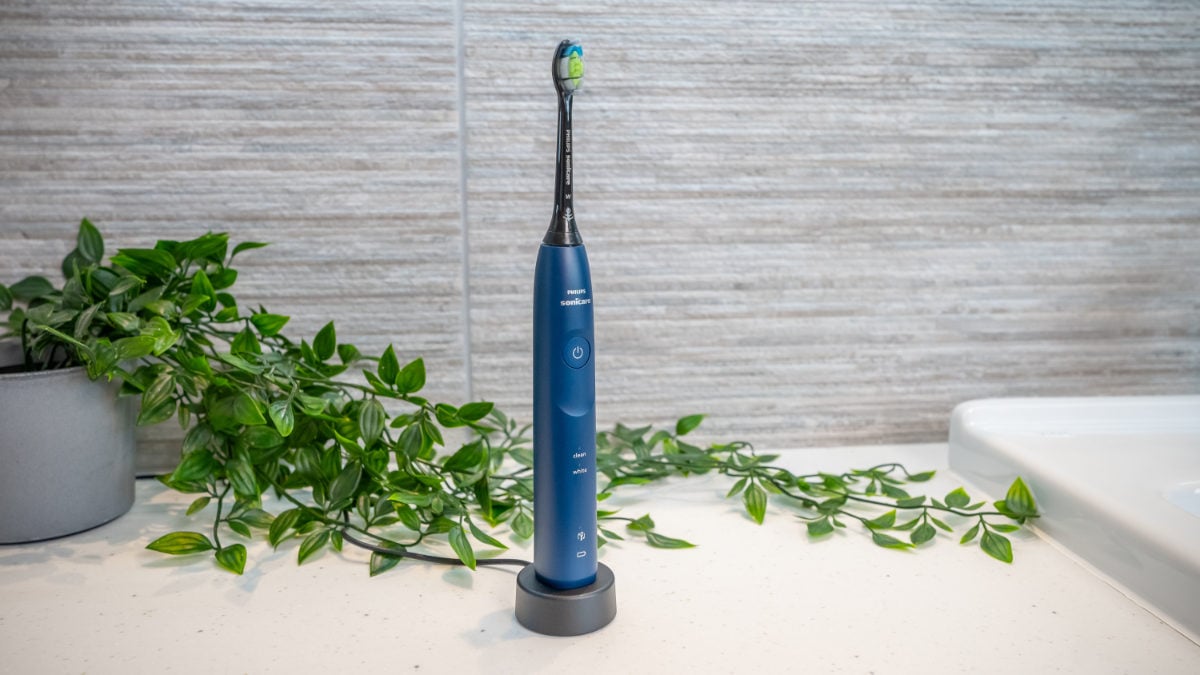
The Philips Sonicare Series 5500 is one of the best brushes I’ve tested.
It cleans the teeth well, has an outstanding battery life and is a dependable choice for anyone looking for a reliable, mid-range electric toothbrush.
It scores highly in the most important categories for an electric toothbrush.
If you often take your toothbrush away overnight, it’s worth considering the version that comes with a basic but functional travel case.


Pros |
Cons |
|---|---|

Excellent battery life |

Whitening rather than sensitive mode |
|
Well-implemented pressure sensor |
How well it cleans
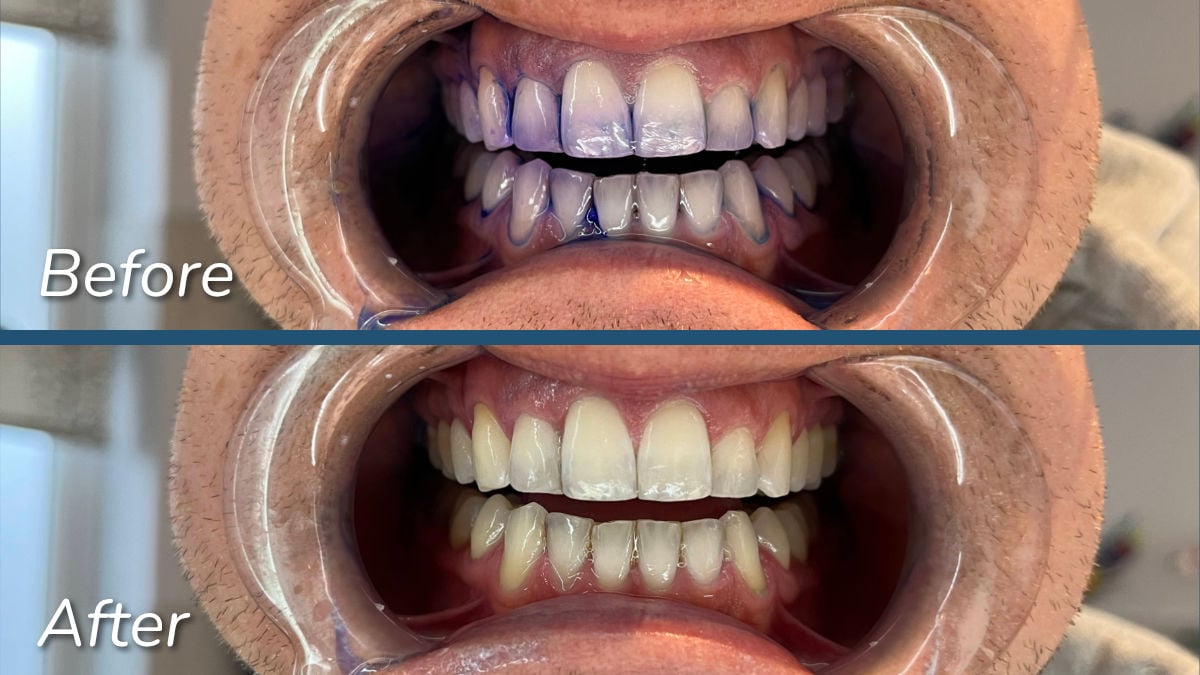
The Series 5500 scores very well in this category, as is to be expected of a Sonicare brush. I’ve included photos of my plaque disclosing tests below. As you can see, there was only a tiny amount of residual plaque left over. Used correctly, the 5500 does its job very well.
The two cleaning modes are sufficient
The 5500 comes with two cleaning modes; standard and whitening. Truthfully, a single cleaning mode is enough to give a good clean, but given a choice of cleaning modes I do prefer a sensitive mode over whitening.
The way the whitening mode works is to include an extra 30 seconds at the end of the standard clean that you can use to polish your stains from your teeth. It’s not an unhelpful addition, but having the option of a less intense sensitive mode is more beneficial in my opinion.
The two modes are labelled on the handle and use an LED to show which is in use. This is useful, although it’s more important when you have more than a couple of cleaning modes.
The cleaning modes are what differentiate the 5500 from the 5300, which has two intensities rather than two cleaning modes and no labels / LEDs. In some ways having the two intensities is more useful as it gives you more granular control. It’s easy to tell which is in use because of the difference in speed and sound.
But, overall, this is a minor detail. My advice is to go for whichever is cheaper of the two. If they are similarly priced, choose based on whether you prefer the idea of a whitening mode or a high / low intensity. It’s worth pointing out that an electric toothbrush will remove light stains regardless of whether or not it has a whitening mode, and it’s not like whitening mode will remove very tough stains.
The new motor technology isn’t very noticeable
The 5500 motor has Sonicare's “next generation” sonic technology which is supposed to enable it to deliver more consistent power in tighter spaces of the mouth. This means that if the motor comes under additional pressure, for example when it’s pressed against the cheeks as you brush your molars, the bristle movement is not reduced.
I can’t say that I could really tell the difference compared to older Sonicare models. Perhaps ever so slightly, but that could have been psychological on the basis of knowing it was there. I could certainly feel a consistent and strong power — it delivers 62,000 movements per minute — throughout the clean, as I'd expect with a premium Sonicare electric toothbrush.
How it feels
The 5500 scores the high marks that are the norm for Sonicare brushes in this category.
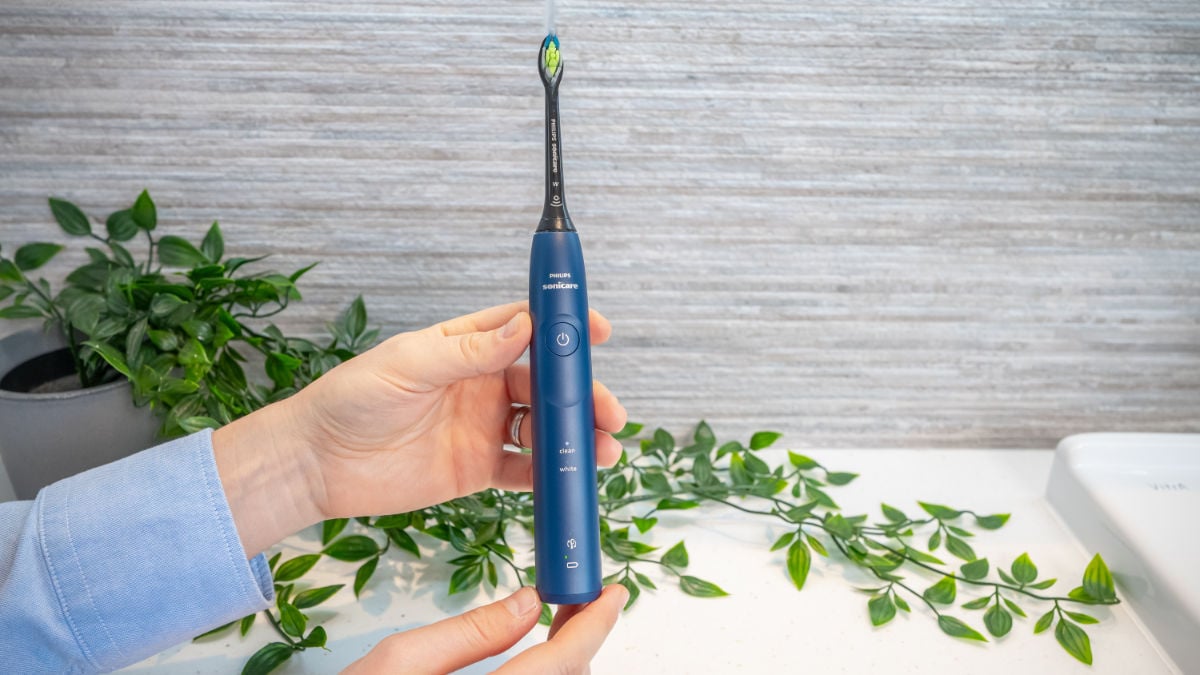
The handle has a comfortable and solid feel with a matte finish. It features a well-built design that draws inspiration from Sonicare’s top of the range brush, the Prestige 9900.
The handle has a satisfying weight to it
While most of Sonicare’s brushes are comfortable to hold and have a quality feel to them, the 5500, along with Sonicare's other new models, feels even better.
The design elements from the Prestige 9900 — Sonicare’s most expensive brush — are deliberately evident, enhancing the brush's quality feel. It’s made from high-quality materials and features a pleasant matte finish. It’s not slippery and has a satisfying weighting to it.
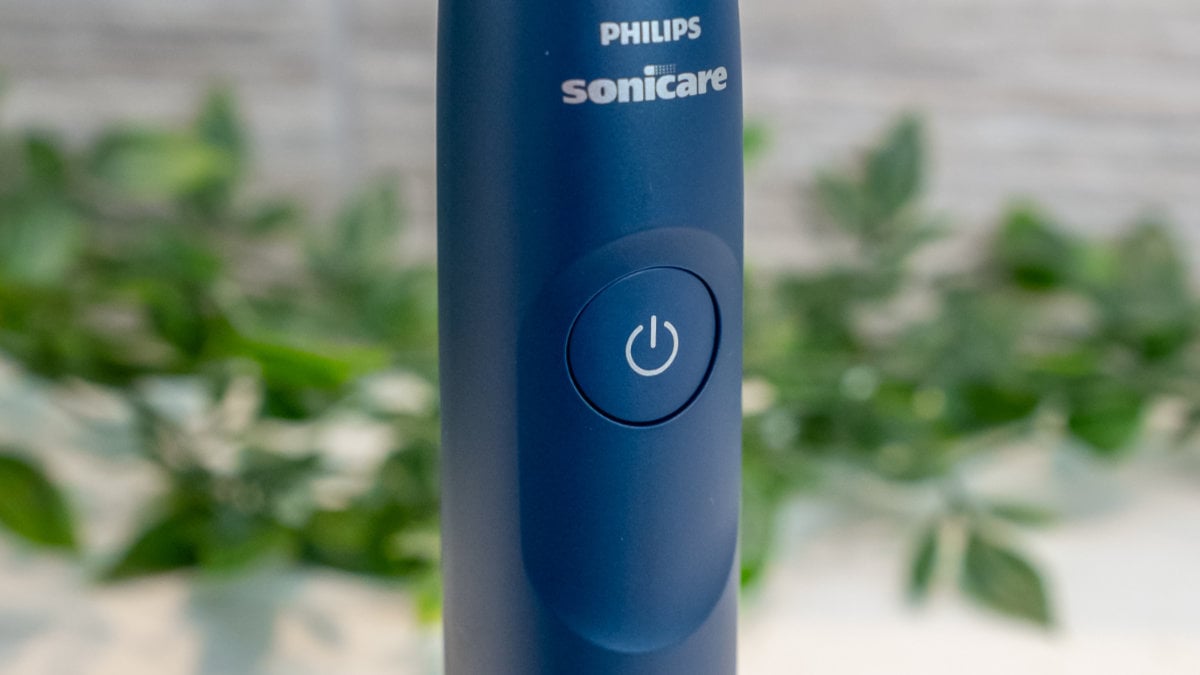
The power button could be a location for grime buildup
The power button on the 5500 is easy to press and serves as the button to change cleaning modes. This is a major difference from some other models like the Prestige, which feature a seamless button design whereby pressing the handle activates the button. While this might seem like a minor point, each design has its pros and cons.
A key benefit of the Series 5500’s physical button is its softer touch, which is especially helpful for people with arthritis or dexterity issues. In contrast, the Prestige button can be quite firm, potentially causing discomfort for those with thumb joint pain. The 5500’s button firmness is what I would describe as typical—not stiff nor too soft.
One downside of the physical button is the gap between it and the handle, which could be a spot for grime to accumulate. While I trust Sonicare’s quality control to have tested this, it seems like a potential issue. The seamless button on the Prestige 9900 was introduced to solve this problem, evident in previous models. Perhaps Sonicare has developed a new solution for this concern and therefore reintroduced the physical button?


Regardless of the model, I recommend rinsing your toothbrush briefly under the tap after use to remove any toothpaste residue. Although it might seem trivial to delve this deeply into power button design, small differences can significantly impact certain users. For example, the 4100 Series features a rubber-coated button with a textured power symbol, making it more noticeable. While not a seamless design, this could allow water and grime to collect under the rubber if not cleaned regularly. Still, this is a minor consideration.
Like many electric toothbrushes, the 5500 has a slight recess around the power button. This feature helps your finger find the button easily, particularly if they are visually impaired or using the toothbrush in darkness. It's both functional and aesthetically pleasing.
Recommended features
The 5500 Series again scores highly in this category, meaning it has a strong implementation of a timer, pacer and pressure sensor, which are the features we regard as the most important for a good electric toothbrush.
The pressure sensor alerts are easy to notice
There are several ways to implement a pressure sensor and I would say that Sonicare has done an excellent job with the 5500 – it’s very noticeable when it’s activated.
If you apply too much pressure while brushing, the sound of the motor changes, indicating that the pressure sensor has been triggered. Additionally, there is a vibration that runs through the handle. I think this implementation is much better for someone who is deaf or blind, as you can easily feel the strength of the vibration, eliminating the need for the visual alerts used in other brushes, like those from Oral-B.
Technically, the 5500 does feature a visual alert because the BrushSync head replacement LED lights up (as seen in the photo below), but its placement on the handle makes it hard to see. It lacks the more visible light ring found in some other Sonicare models.
It's also worth mentioning that you have the option to turn off the pressure sensor if you prefer, which is a nice feature. The same applies to Sonicare’s EasyStart, which helps ease you into using an electric toothbrush by gradually increasing brushing power over the first 14 sessions. If you're already familiar with electric toothbrushes, you might want to disable it. These subtle features contribute to the overall user experience and help justify Sonicare's slightly higher price.
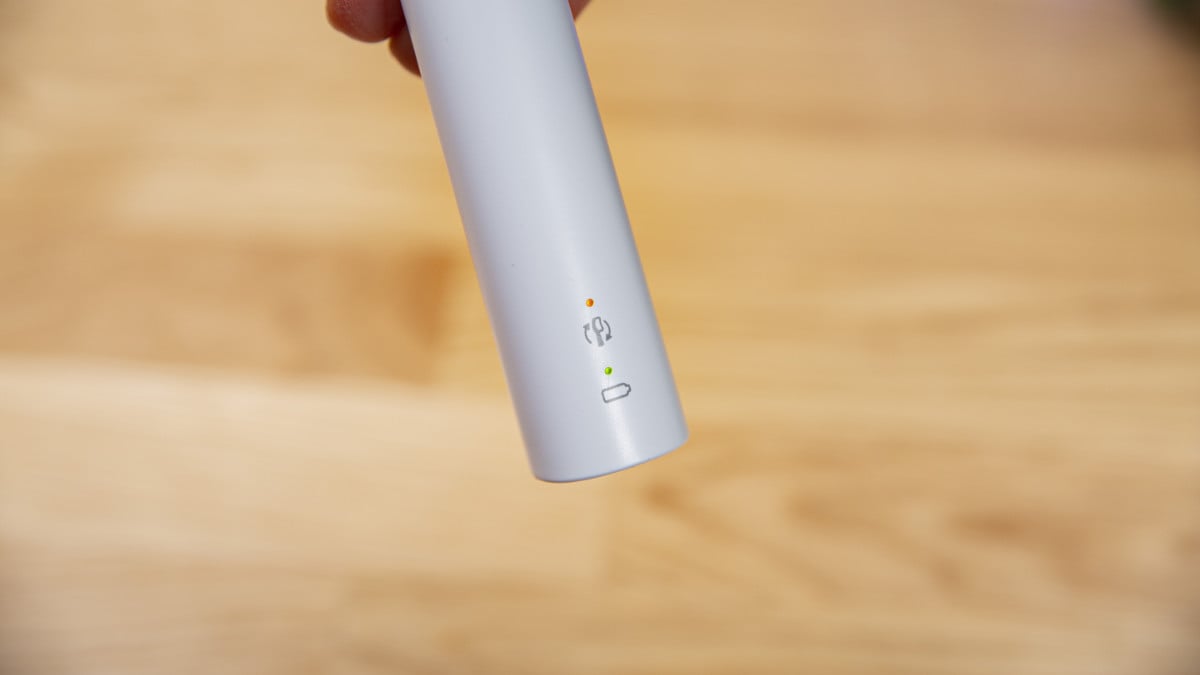
Please note: the above image shows the 4100 handle, which only has one battery notification LED, whereas the 5300 has three LEDs (see a close up below in the battery section). The BrushSync notification / visible pressure sensor alert is the same on both handles.
Auto power off and sextant pacing
Like many Sonicare brushes, the Series 5500 automatically turns off after 2 minutes of brushing. Meanwhile, its pacing feature divides the mouth into 6 zones, prompting you to brush each area for 20 seconds, as opposed to the traditional method of 4 zones for 30 seconds each.
If you stick to the pacing guide, using the 4 zones for 30 seconds each might be slightly more convenient, but in reality, the difference is minimal. What’s crucial is ensuring that you brush all your teeth evenly, both front and back.
Additional items & features
The 5500 Series doesn’t score as highly in this category , but that’s not a bad thing. Its price is kept down by only including the features necessary for a good clean. In the sections below I comment on considerations not included in other categories.
Quiet to use, easy to clean
The Series 5500 is simple to clean, thanks to its smooth handle design without any raised or textured surfaces or rubber grips that might degrade over time.
As mentioned earlier, it would be prudent to pay extra attention to the power button area. Ensure it's thoroughly rinsed to avoid toothpaste residue buildup. Although the gap between the power button and handle doesn't allow water inside the device, dried residue could be difficult to clean out should it build up.
Regarding the noise level, I recorded it at 63dB during testing. Whilst that’s not the quietest among Sonicare's brushes, it’s still very quiet overall. In comparison, the Oral-B Pro 3 3500 is 10dB louder at 73dB. Although noise might not be a major concern for most users, opting for a sonic toothbrush is a good choice if minimising sound is important.
|
Philips Sonicare Series 5500
|
|
Philips Sonicare Series 5300
|
|
Philips Sonicare 3100 Series
|
|
Philips Sonicare 4100 Series
|
|
Oral-B Pro 3 3500
|
The travel case version is worth it if it’s not priced much higher
With the way Sonicare pricing and availability works, you may sometimes see a vast difference in price between retailers and variants.
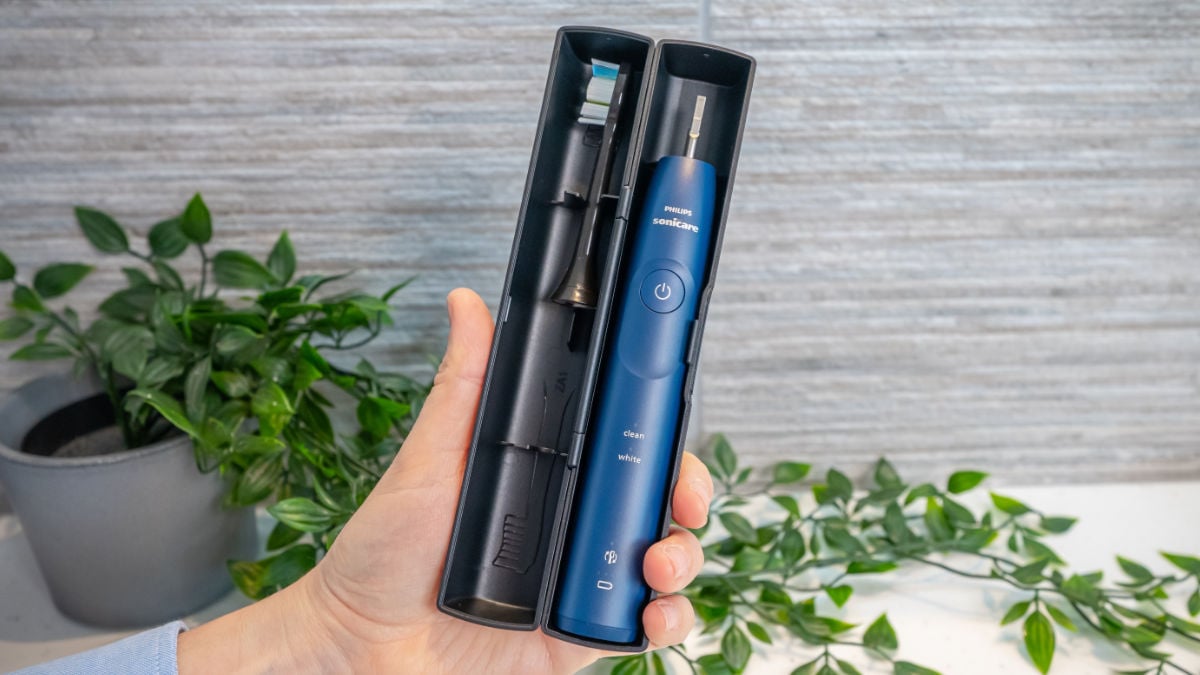
At the time of writing, there was around £20 difference between the case and non-travel case variants. That’s the upper limit of what I would pay for the travel case. It’s not bad for what you get, but it is just a bit of plastic.
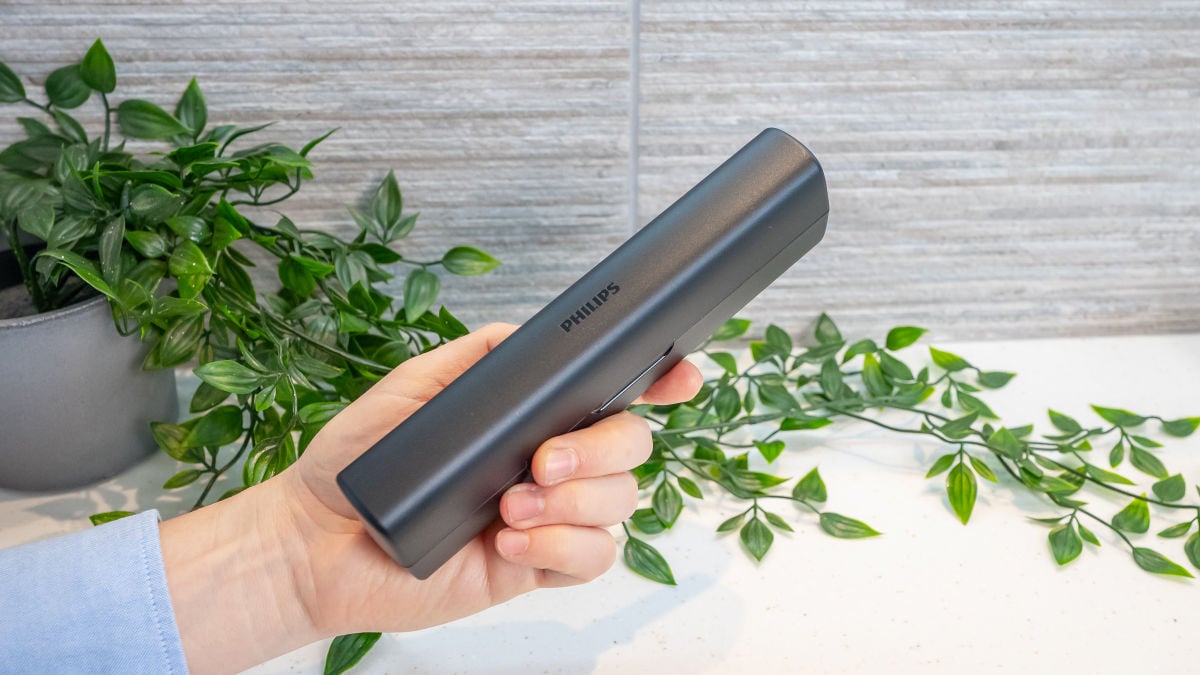
It's a basic and lightweight case that's square in design. It holds the handle and up to two brush heads and clips together rather than being magnetic. It’s perfectly functional.
While it might come apart if dropped on a hard surface, this isn't a major concern and it would still protect the brush. If you often take your toothbrush away with you, it’s useful to have.
You can buy a charging travel case for it separately
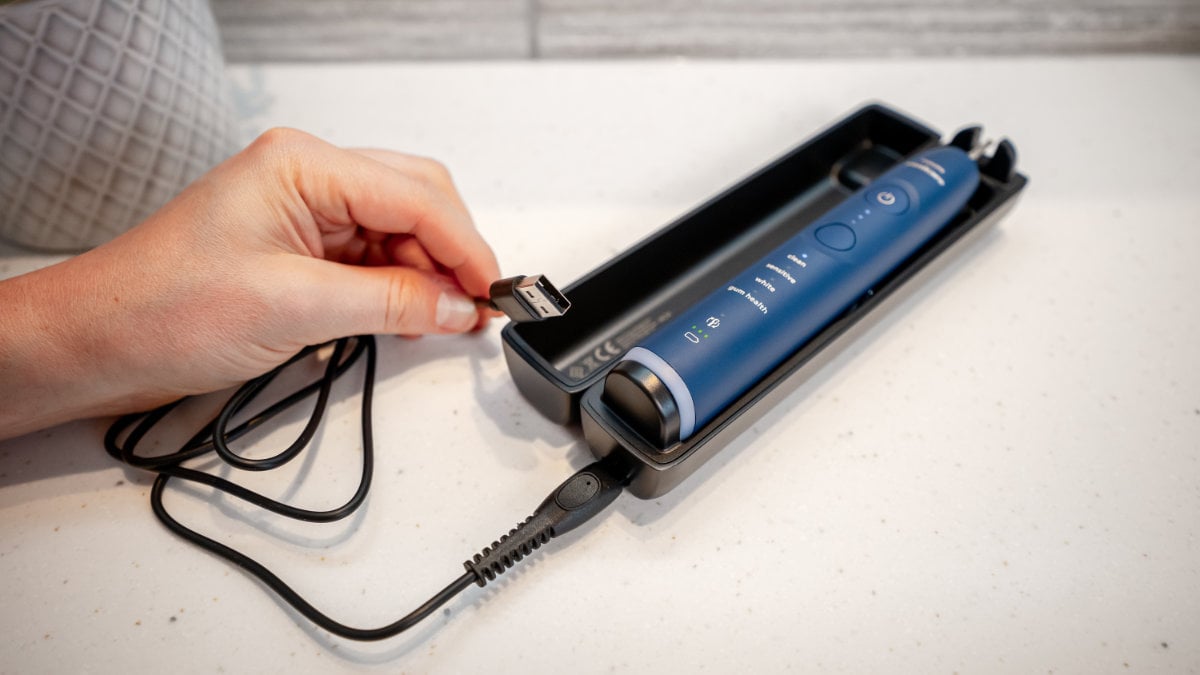
It's worth mentioning that other models, like the Series 6500 and 7100, come with a similar case that can charge the toothbrush while it's inside. This case is also compatible with the 5500 model and costs around £20 from Philips at the time of writing.
For frequent travelers, this feature offers a convenient way to keep your toothbrush charged on the go. However, the 5500 achieved a 51 day battery life during my testing, so if you fully charge it before your trip you might not need to recharge while you're away.
It's important to note that the charging travel case uses a detachable USB-A to proprietary 2-pin connector, meaning it can't be charged with a USB-C phone charging cable like some cases, such as SURI. The charging stand included with the Series 5500 uses a USB-A connection, making it compatible with phone chargers that have a USB-A port, which many now do.

It’s BrushSync compatible
The Series 5500 doesn’t have any smart features, but it is BrushSync compatible. This means that if you use BrushSync-compatible heads, the BrushSync LED will light up when it's time to replace them. BrushSync heads are more expensive, so if you're budget-conscious, you might prefer sticking with regular heads. The 5500 works with both types.
The 5500 doesn’t have mode pairing, which matches the brush head with the optimal cleaning mode, but you're not missing out here. There isn’t much noticeable difference between the various heads and modes, and there are only two modes to choose from on the 5500 anyway. For more detail, check out our post on the best Sonicare brush heads.
The effort required to remove brush heads is about right. Sometimes they can be a little bit stiff, as is the case with many electric toothbrushes, but overall it’s not a major concern.
Battery performance
Battery performance is another category in which I’ve awarded the Series 5500 high marks. It outperformed Sonicare’s own stated battery life by quite some way. An additional bonus is that the battery is fairly easy to replace, should you need to further down the line.
51 days of battery life is seriously impressive
Sonicare states a 21 day battery life for the 5500, but in my testing it actually scored 51 days on average, which is a huge difference. 51 days is at the higher end for an electric toothbrush and it’s a particularly impressive figure at this price point.
The bigger battery is one of the key differentiators between the 5500 and the 4100 Series. It means you need to charge it less often to get more usable time from it, which could be a key factor if you’re choosing between the two. I measured the 4100 Series battery at 17 days, which isn’t bad, but a difference worth considering if you prefer to not have to charge your brush very often.
In the table below you can see the battery life of the 5500 compared to similar Sonicare models and the Oral-B Pro 3 3500.
|
Philips Sonicare Series 5500
|
|
Philips Sonicare Series 5300
|
|
Philips Sonicare 3100 Series
|
|
Philips Sonicare 4100 Series
|
|
Oral-B Pro 3 3500
|
A bigger battery does mean a bigger handle
That being said about battery life, there is a notable size and weight difference between the handles of the 4100 and 5500.
The 4100 Series is approximately 30 to 40% smaller and noticeably slimmer. Whether this is an advantage or a disadvantage depends on your individual needs. If you have dexterity issues, the lighter and slimmer design might be beneficial, making it easier to hold than a heavier toothbrush.
Conversely, if gripping objects is challenging for you, you might favour the larger handle of the 5500 model.
The dimensions and weight with the head attached are as follows and I've annotated them in the photo below:
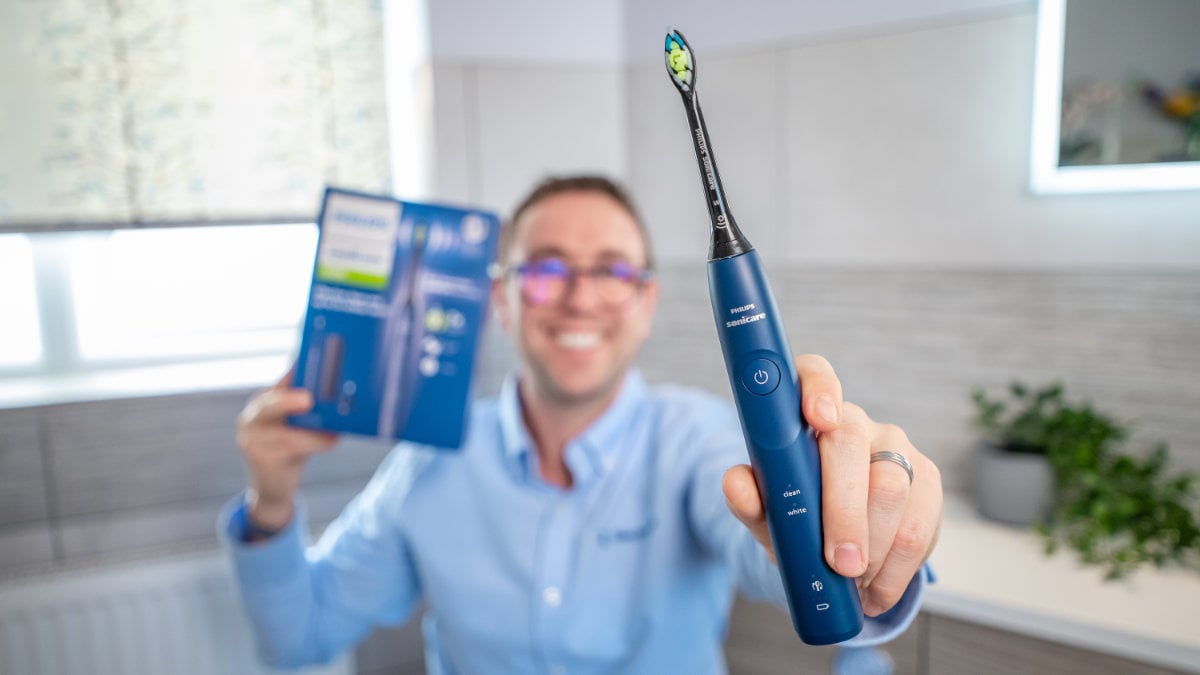
Sonicare Series 5500: 2.8cm wide x 24cm tall x 3cm depth, 123g.
Sonicare 4100 Series: 2.5cm width x 23.4cm height x 2.7cm depth, 97g

Three bars for battery feedback is more helpful
The three-bar battery status indicator on the front of the 5500 is more informative than the single LED found on the 4100 Series. While both function similarly, the three bars provide a more detailed view of the remaining battery percentage.
Not to compare the 5500 to the 4100 too much, but it’s similarly priced and spec’d so it’s a useful comparison to make.
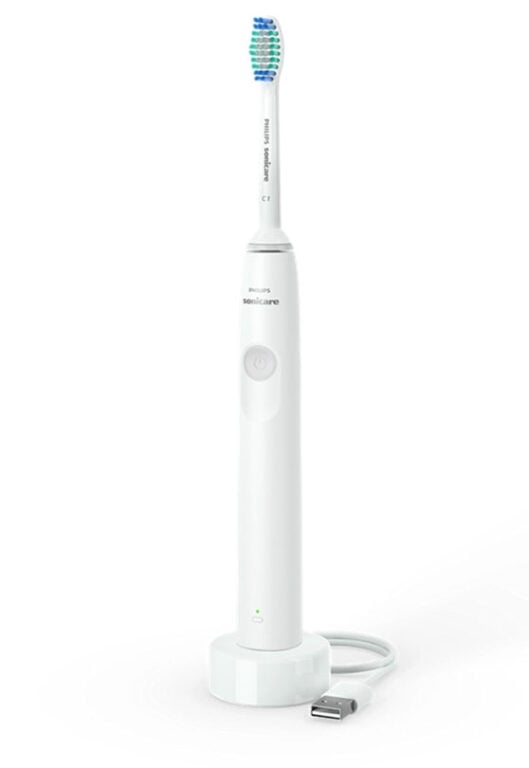
Like most newer Sonicare models, the 5500 features a USB-connected charging stand. It has a matte finish, in contrast to the glossy finish seen in previous models like the 4100, 2100, and 1100.
Charging the battery to full capacity takes up to 24 hours, which is typical for Philips Sonicare brushes. Given that it offers over a month of use on a single charge, this charging time is quite reasonable.
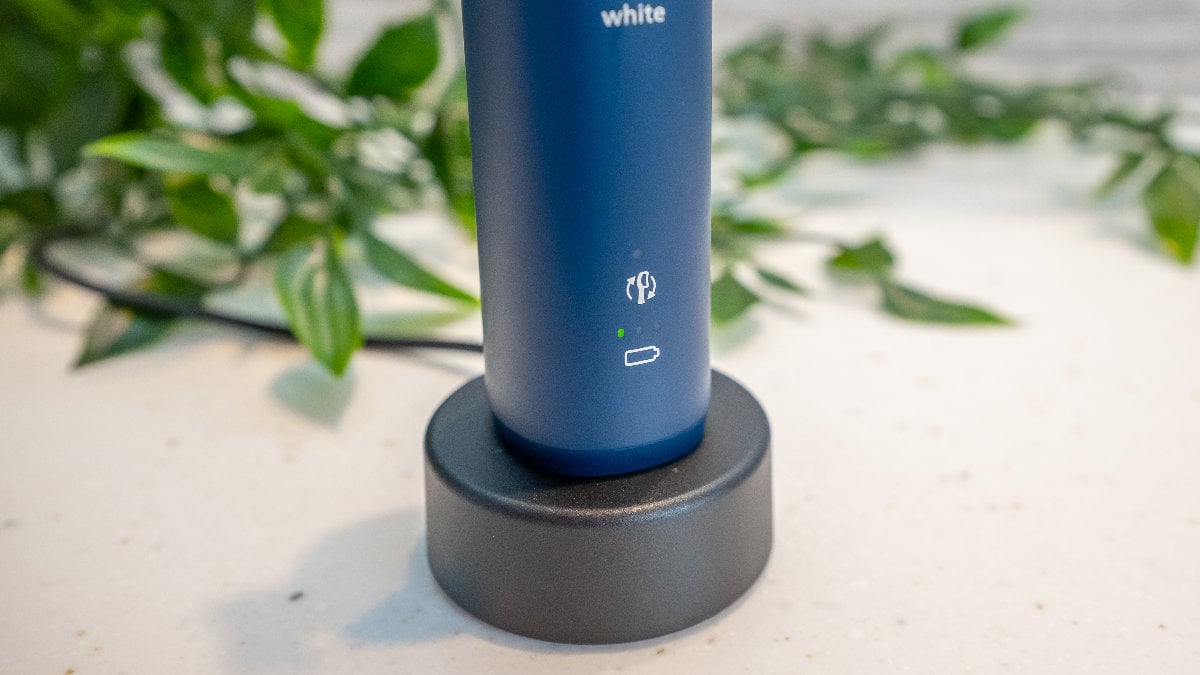
The battery is user replaceable
The battery can be replaced by the user, although Philips Sonicare doesn't explicitly mention this in the manual and generally doesn't recommend it unless absolutely necessary. Using a Torx screwdriver and a Phillips screwdriver, you can replace the battery yourself. This is advantageous if your battery loses its capacity after years (I would expect at least 5) of use, as you can replace it with minimal hassle and cost.
To do this, you'll need to remove a Torx screw at the base of the handle, allowing you to easily take off the base cap. Then, by applying pressure to the spindle at the top of the handle and pushing down, the internal components will slide out. Be cautious of the spring that may pop out. The battery is a 750 mAh unit.
Price & buying advice
The closest equivalents to the Series 5500 in the Sonicare range are the 5300 from this new 2024 series of Sonicare brushes, and the 3100 and 4100 Series. All four brushes are very similar.
If there’s not much difference in price, the 5300 or 5500 are worth going for over the 3100 and 4100. For about £15 more you get at least a week’s more battery life, a better battery status icon and a stronger motor. If those features aren’t particularly important to you, you could opt for the 3100 or 4100 and save some money.
It’s worth pointing out that the 5300, 5500 and 4100 have a stronger motor than the 3100. The 3100 motor feels akin to the lowest intensity settings on the other brushes. All four brushes will clean your teeth very well, but if you prefer a more intense clean choose one of the others over the 3100. Other than that, the brushing experience will be almost the same across all four of them.
In terms of comparing the 5300 and 5500, they are almost identical. The 5300 comes with a high and low intensity setting for the cleaning action, whereas the 5500 comes with two different cleaning modes — standard clean and whitening. The 5500 has labels on the handle for the cleaning modes, whereas the 5300 doesn’t have labels for its two intensities. In practice, there is little difference between the intensities and cleaning modes. If one brush is much better priced than the other, it’s worth going for that one. Do check the prices of the variants that come with a travel case as well.
If you're looking to reduce costs, the Oral-B Pro 3 3500 is another option worth considering. It offers a similar set of features, but Oral-B replacement heads are more affordable, which results in a slightly lower overall lifetime cost. However, the difference isn't substantial. Oral-B uses oscillating-rotating brushing technology as opposed to sonic technology, so your choice might depend on your personal preference for one over the other. Both the Pro 3 3500 and the Series 5300 / 5500 come highly recommended in our roundup of the best electric toothbrushes.
| Overall Score |
| How well it cleans |
| How it feels |
| Recommended features |
| Additional items & features |
| Battery performance |
| Smart features |
| Price |
| Buying options |
|
Our Choice

|
|

|
|

|
|---|---|---|---|---|
|
82
|
85
|
73
|
83
|
79
|
|
100
|
100
|
69
|
100
|
100
|
|
88
|
88
|
88
|
88
|
76
|
|
82
|
82
|
82
|
82
|
82
|
|
42
|
62
|
62
|
38
|
24
|
|
80
|
80
|
60
|
60
|
53
|
| - | - | - | - | - |
|
57
|
43
|
87
|
43
|
100
|

Support & reputation
The 5500 is backed by a two-year warranty, which is the standard for electric toothbrushes in the UK. It feels sturdy and dependable, so you can expect it to last well beyond the warranty period.
The battery is replaceable by the user, which means if it loses capacity after several years, you should be able to replace it yourself. This feature extends the lifespan of the brush, making it more cost-effective and reducing its environmental impact.
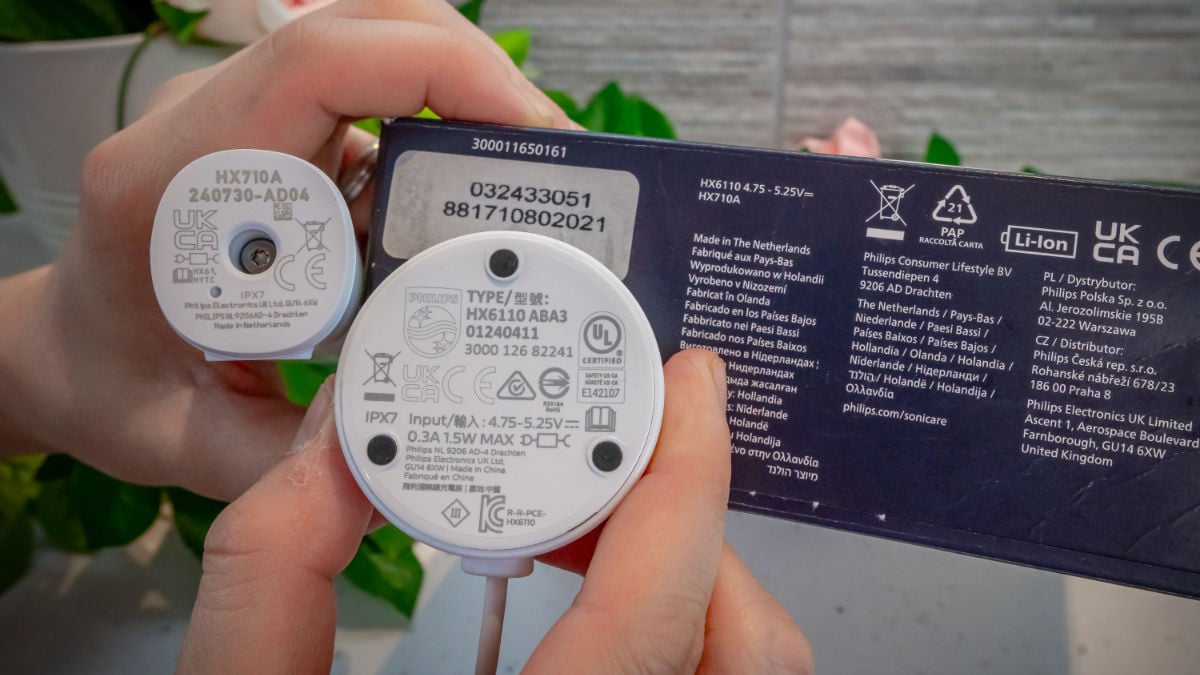
It's worth noting that the brush handle and packaging indicate that it is made in the Netherlands, while the charging stand is marked as made in China. This is not unique to the 5500, but it’s clear that parts of its components are likely manufactured in China. Although the final assembly may occur in the Netherlands, a significant portion of the brush is probably produced in China.
This situation is common with many electric toothbrushes and other products, but if the product's origin is particularly important to you, it's something to keep in mind.
Environmental impact
We don't assign a score to this section because it's challenging to evaluate accurately without comprehensive data on manufacturing and shipping processes.
However, based on our understanding of the environmental impact of electric toothbrushes, here are some specific comments about the Sonicare Series 5500:
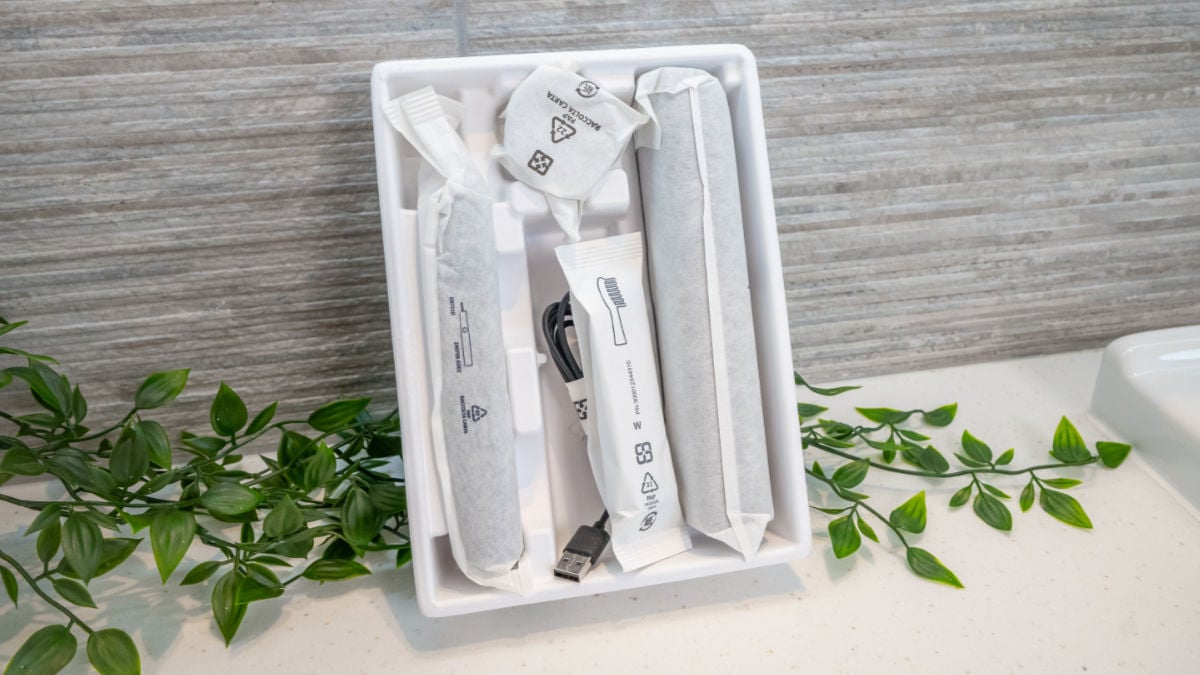
Firstly, its packaging is made of paper and cardboard instead of plastic. While this is a relatively small factor, it's a positive step away from single-use plastic, which has been a concern I've raised before.
According to product listings on the Sonicare website, some of its brush heads are now made from 70% bio-based plastic. Although it's still plastic, bio-based alternatives are preferable to petroleum-based plastics as they make use of renewable resources instead of finite ones.
Previously Sonicare had partnered with Terracycle for recycling brush heads, but this has now been discontinued. We would like to see it introduce its own recycling program to help manage the waste it produces. SURI is an example of a manufacturer that has implemented this.
Since the 5500 doesn’t include smart features, it uses fewer components than a smart toothbrush, reducing its overall impact. However, Sonicare BrushSync heads contain an RFID chip, making them more resource-intensive than regular heads that lack this technology.
Additionally, as mentioned earlier, the battery is replaceable by the user, which makes it easier to extend the life of the brush — always a better option than purchasing a completely new one.
Video
You can find out about my hands-on testing and experience with the Sonicare Series 5500 in the video below.
Conclusion
I’ve been thoroughly impressed by the 5500 and the other brushes in this new series that Sonicare has introduced in late 2024.
It’s hard not to mention the 5300 alongside the 5500. They are so similar that it would be remiss of me not to advise you to go for whichever is cheapest.
Both brushes are a superb mid-range option that do their jobs very well. If you want a dependable brush that covers the essentials for good oral hygiene, go ahead and buy one of them.
With significantly improved battery life, a stronger motor, and a better battery status icon, there’s a lot to like about both the 5300 and 5500. As mentioned above, the gap around the physical power button is something you may need to pay attention to, but it’s a minor point. Other than that, I can't fault them.
Size guide
- Toothbrush height with head - 24cm / 9.4 inches
- Toothbrush height without head - 18cm / 7.1 inches
- Width - 2.8cm / 1.1 inches
- Depth/thickness - 3cm / 1.2 inches
- Weight with head - 123g / 4.3oz
- Weight without head - 118g / 4.2oz
- Package weight - 379g / 13.4oz
Noise
- 63dB
Country of manufacture
- Netherlands (handle) & China (charger)

Hi! I've been going down the rabbit hole of electric toothbrushes the last couple of days, your website is a real gem, I could't find any comparable source for such detailed independent reviews. After careful review, I still can't decide between two brushes, the Sonicare 4100 and 5500.
I like the slim design of the 4100 a lot and prefer the black colour over the blue of the 5500. The travel case of the 4100 is slimmer, but the case of the 5500 has the better quality. Furthermore, the battery life of the 5500 is far longer. In the end it comes down to which one has the better motor for me.
I couldn't really interpret what the following paragraphs meant for the 4100, since the first paragraph groups it with the 3100, but the second one with the 5000 series models:
If there’s not much difference in price, the 5300 or 5500 are worth going for over the 3100 and 4100. For about £15 more you get at least a week’s more battery life, a better battery status icon and a stronger motor. If those features aren’t particularly important to you, you could opt for the 3100 or 4100 and save some money.
"It’s worth pointing out that the 5300, 5500 and 4100 have a stronger motor than the 3100. The 3100 motor feels akin to the lowest intensity settings on the other brushes. All four brushes will clean your teeth very well, but if you prefer a more intense clean choose one of the others over the 3100. Other than that, the brushing experience will be almost the same across all four of them."
So my question would be: Is the motor in the 5500 better than the one of the 4100? Is it an impactful difference? Did I miss an important aspect to consider?
Thank you very much for your help!
PS: Price isn't a factor for me, I could buy the 4100 for 50€ and the 5500 for 65€, but since my parents will pay for it, it doesn't make a difference for me.
Hi Valentin.
Thanks for the comment and glad you've found our content helpful.
Sorry if anything has been confusing here. The reality is Sonicare make subtle differences which are hard to really speak about in text.
In short, the motor in the 5500 is different to the motor in the 3100 and 4100 Series. It is 'better' and more powerful.
The 4100 Series has a different motor to the 5500 and it isn't quite as good and a little less powerful. It is more powerful than the 3100 Series.
But although the 5500's motor is 'better' the 4100's is still very good. I can't categorically tell you cleaning results in the short or long term are signficantly better with the 5500 than the 4100. There really isn't much between them if I am honest. You would tell a difference if used side by side.
Personally if I was buying I would go for the 5500. You state the motor is most important to you, so I would suggest you opt for this.