





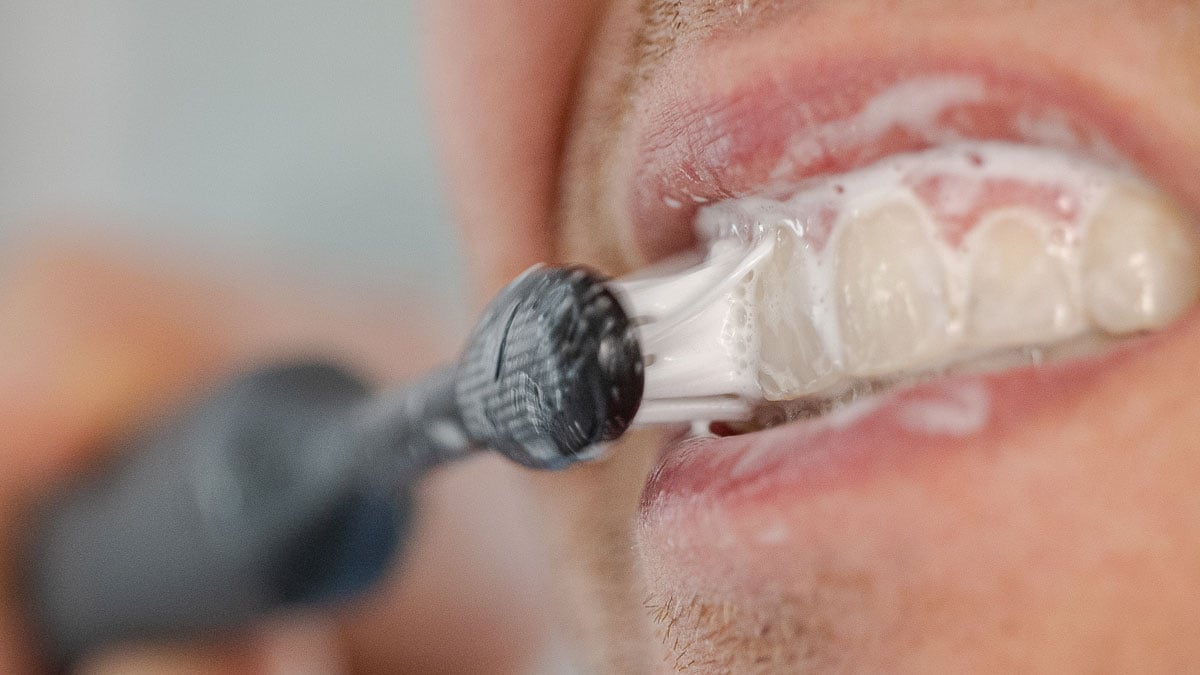

We are in the process of updating this post with new video demonstrations to reflect the most up to date advice. Where necessary, we have added explanations to correct advice in the older video we currently show.
When using a manual toothbrush, you should rotate the brush in small concentric circles around each tooth, but this isn't the case for all electric toothbrushes.
The correct way to use an electric toothbrush varies depending on which type of technology and the brand you are using. Ideally, you should check the instructions from the manufacturer of your brush, but in this post we explain and demonstrate the advice for the main types of electric toothbrush.
Here's a quick summary of the method to use for each type of brush:
- Oral-B, spinning style: move the brush from tooth to tooth, do not move in a circular motion
- Sonicare, vibrating style: move the brush from tooth to tooth, do not move in a circular motion
- Non-Oral-B, spinning style: move the brush from tooth to tooth, do not move in a circular motion
- Non-Sonicare, vibrating style: move the brush from tooth to tooth, DO move in a circular motion
Oral-B
Oral-B brushes use oscillating-rotating technology, which is akin to a spinning motion. This means that the brush performs a circular cleaning movement for you — there is no need to move it in small concentric circles, like you would a manual brush.
When using an Oral-B, you simply run the brush from tooth to tooth, there is no need to move the brush head up and down or to scrub. The motion of the head produces the cleaning effect.
You can see Oral-B's full instructions here.

Sonicare
Sonicare toothbrushes use sonic cleaning technology, which makes them vibrate at a high frequency. However, this does not move the bristles in a circular motion like with oscillating-rotating technology.
In the past, Sonicare had advised that you move its brushes in small concentric circles whilst using them, much like you would a manual toothbrush. But recently, it updated its advice to say that the brush should simply be moved from tooth to tooth, as with an Oral-B brush.

Non-Sonicare, sonic toothbrushes
As a rule of thumb, you should move a sonic brush in a small circular motion as you brush. Yes, this is contrary to the advice for Sonicare brushes (shown above) that use the same sonic brushing technology. The advice may vary from one manufacturer to another, so do check if possible.
Starting around 2:16 in the video below, you can see the technique that you should use.
As an example, SURI, a popular sonic toothbrush manufacturer, does advise that you move its brush in a circular motion when brushing.
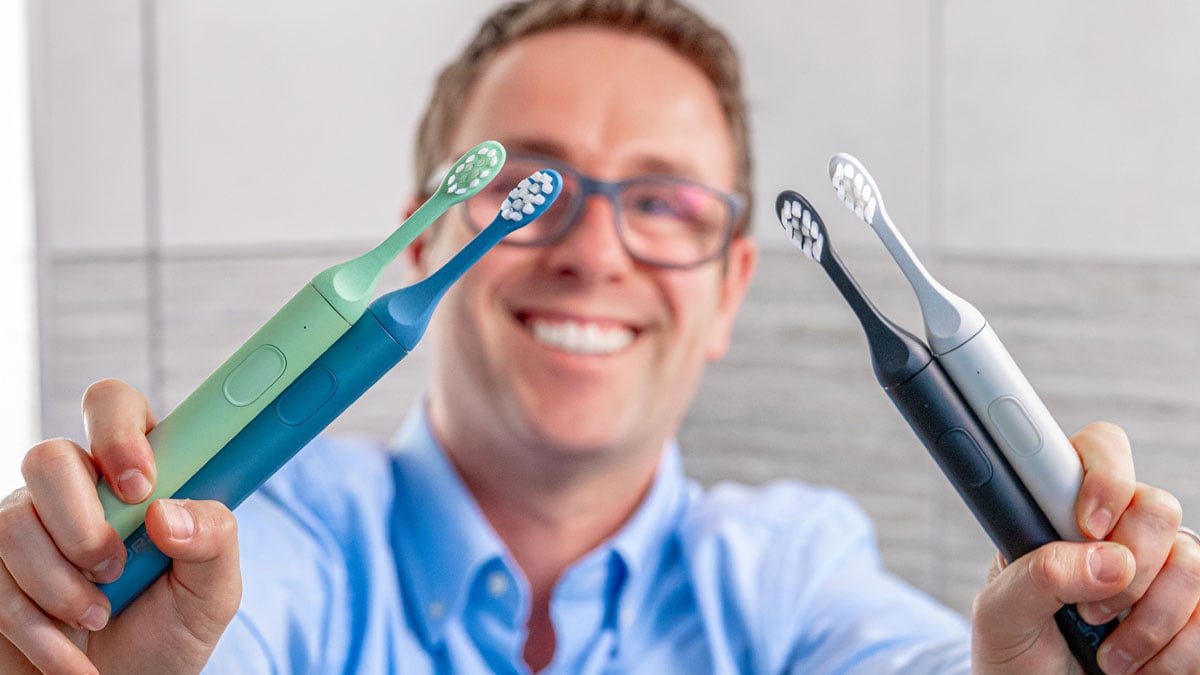
Non-Oral-B, spinning toothbrushes
Compared to sonic toothbrushes, there aren't as many challenger brands that use oscillating-rotating (spinning) technology. But for those that do exist, you use the same technique as with an Oral-B, moving the brush from tooth to tooth and without making circular motions. An example of a challenger brand that uses the same technology as Oral-B is Bitvae, specifically the Bitvae R2 brush:

Why the difference in technique between Sonicare and non-Sonicare sonic brushes?
You may be wondering why, seeing as they use the same technology and a similar shaped head, there is a difference in technique between Sonicare sonic brushes and non-Sonicare sonic brushes.
We asked sonic toothbrush manufacturer SURI about this and they told us that their clinical tests found that more plaque was removed when using a circular motion with the SURI toothbrush.
Sonicare has not disclosed any testing results, but presumably similar tests on its own brushes have shown that not using a circular motion removes as much plaque as when you do use a circular motion. Seeing as it is easier for the user to not have to move the brush in circles, they thus advise this is not necessary.
In terms of a technical difference, it's possible that Sonicare brushes have stronger vibration than other sonic brushes and therefore disrupt more plaque, or that the Sonicare bristle arrangement disrupts more plaque and therefore the circular motion is not necessary. These are just suggestions at this stage though and are not confirmed technical differences.
If you're confident in your technique, you could move your Sonicare brush in a circular motion if that is your preference. It could even be worth using plaque disclosing with both techniques to see if one does remove more plaque than the other for you personally.
Video demonstration
The Oral-B demonstration that is shown in this video (starting around 0:45) is still correct and up to date.
The Sonicare demonstration (starting around 2:16) has changed slightly, as described in the Sonicare section above. You do not need to move a Sonicare brush in a circular motion, although it is not a problem if you continue to do so.
For non-Sonicare sonic toothbrushes, unless advised otherwise by the manufacturer, you should still move the brush in a circular motion as shown in the demonstration starting at 2:16 in the video below.

The full technique for using an electric toothbrush: step-by-step
Taking into account the differing advice above from one manufacturer to another, follow these steps to brush your teeth properly with an electric toothbrush.
Step 1
Place a pea sized amount of fluoride toothpaste onto a soft bristled brush.
Do not turn on the brush until it is against the teeth.
Step 2
Visualise splitting your mouth into 4 sections (quadrants), focusing for 30 seconds on each. Upper right and left, lower right and left.
Starting with one of the upper quadrants, begin on with the outer surface i.e the surface closest to the cheeks. Move on to the inner and chewing surfaces of the teeth. Hold the brush at a 45 degree angle to the teeth so that the toothbrush bristles are able to clean the gums.
The approach differs slightly, depending on whether you are using an Oral-B oscillating rotating round brush head or a Sonicare (sonic) brush head.

Oral-B & Sonicare
Starting at the tooth closest to the back, simply run the brush from tooth to tooth, there is no need to move the brush head up and down or to scrub, as the motion of the head produces the cleaning effect.
Non-Sonicare sonic brush
Starting at the tooth closest to the back, move the brush head to create a small circular motion. You need to keep repeating this motion for the whole of the clean and repeat it fairly quickly (but not vigorously) before you move the brush head to the next tooth. Expect to complete approximately 3-5 small circles per tooth. Keep repeating this circular motion as you move the brush head over the teeth, moving from the back tooth towards the teeth at the front of the mouth. There is no need to scrub the teeth.
Step 3
Focus on 1-2 teeth at a time and ensure you reach your back teeth. You need to spend 1-2 seconds on each tooth. Make sure the brush covers the whole tooth and includes the gum line. This should mean that it takes about 30 seconds to clean each quadrant.
Step 4
Move to the next upper quadrant and continue to use the same technique and then move to the lower quadrants at 30 second intervals. Your electric toothbrush will likely have a pacer built in to help you track your cleaning time.
Step 5
To clean behind the front teeth, tilt the brush vertically. Doing this will help avoid tartar or calculus build up (and potentially those expensive visits to the hygienist!).
Step 6
Once the 2 minute cleaning cycle is complete, you will have brushed your teeth and gums. It is, however, worth taking a few extra seconds to clean the tongue. Move your brush head from the back to the front of your tongue several times to rid the surface of food particles and odor-causing bacteria to freshen your breath.
Also brushing the inside of the cheeks can help with freshness. You may prefer to turn off the brush at this point and use the stationary brush head like you would a manual brush.
Step 7
Spit out excess remaining toothpaste.
Do not rinse your mouth! The fluoride in the toothpaste will provide the best protection if it is left on after brushing. For this reason, you should not rinse with water after brushing. Also, do not rinse with mouthwash as the fluoride content in this is lower than in toothpaste.
Repeat this cycle a minimum of twice a day.
Some electric toothbrushes and specialist heads require a different approach. Consult your electric toothbrush manual or your dentist for further instruction.
More toothbrushing tips
- Brush for 2 minutes twice a day using only a pea sized amount of toothpaste.
- Break the mouth up into 4 quadrants, spending 30 seconds on each.
- Focus on 1-3 teeth at a time spending 1 or 2 seconds on each.
- Make sure you pay attention to your rear teeth.
- Floss once a day, opt for special flossing tools or interdental brushes if you find this easier.
- Brush the tongue and even inside of the cheeks to help remove bacteria and keep a fresh mouth.
- Do not brush too hard or too fast. Too much pressure can damage your teeth and the bristles on the brush reducing effectiveness.
- Wait 45 minutes after eating before brushing your teeth. Residual sugars or acid juices from food and liquid can actually damage the enamel if they are brushed into the teeth.
- Rinsing water around the mouth is a good option to remove excess food particles and freshen the mouth and can be completed straight after eating (but avoid after brushing).
- Opt for a brush with short bristles. Longer bristles require longer movements which can be difficult to achieve in the restricted space of a mouth.
- Avoid excessive amounts of sugary drinks or foods and liquids that can stain the teeth like tea, coffee, and red wine.
- Replace your toothbrush or brush head every 3 months.
- Visit a dentist regularly, preferably every 6 months or at least once a year.
- Speak to your dentist for professional cleaning advice for your teeth.

I just purchased a new Oral B IO 9 series, and I had a question about the time length of brushing. In the video she says to lightly hold the brush on each tooth for around 3 seconds. This means it would take 3-4 minutes to effectively brush all your teeth. Is it bad for gum recession to take that long? I am bit confused since in the text you say to only take 1-2 seconds per tooth surface?
Hi Jason.
A very valid question given the inconsistency between video and text. 1-2 seconds per tooth surface is in practice sufficient and should get you on track for a cleaning time of around 2 minutes. If you stick to this.
The 3 seconds mentioned really encourages longer brushing to ensure a thorough job is being done, because the reality is far too many spend insufficient time brushing their teeth, even when they have a timer and pacer built into their toothbrush. I believe that Dr Chauhan was using this as a benchmark perhaps knowing most count to 3 seconds quite quickly and are actually actually only brushing a surface for 2 seconds.
Brushing for 3 minutes twice a day should be fine and there should be no signs of gum recession presuming no excess pressure is used etc.
Having the iO is Series 9 as a toothbrush is very impressive. For yourself, via the app you will be able to see precisely the surfaces you have cleaned and you will likely find the app does encourage you to brush a little longer than 2 minutes, to really achieve a deep and thorough clean.