





What the cleaning experience is like and how clean our teeth felt after brushing.
How well it cleans Score SummaryWhat the brush is like in-hand; how grippy it is, what the balance is like, how easy it is to remove brush heads.
How it feels Score SummaryDoes the brush have our recommended features of a timer, pacer & pressure sensor and how well do they perform?
Recommended features Score SummaryHow long does the battery last, how long does it take to charge and does the brush have a battery level indicator?
Battery performance Score SummaryWhat are the total ownership costs over the space of several years and how expensive are replacement brush heads?
Price Score SummaryHow easy is it to clean the brush, how noisy is it, does it come with a travel case or any other useful items?
Additional items & features Score SummaryHow long is the warranty, what is the manufacturer's reputation and how strong are its environmental efforts?
Support & reputation Score SummaryApplies to smart toothbrushes only. How well does the smart technology work and how useful is the app?
Smart features Score SummaryOur verdict


The iO Series 3 cleans well, has a sleek design and a quiet motor.
It’s almost perfect as it doesn’t boast unnecessary features, but the expensive iO-specific brush heads increase the total cost.
We rate it as the best Oral-B toothbrush.

Pros |
Cons |
|---|---|

Premium looking handle that is easy to keep clean |

No cleaning mode labels/icons |
|
Quieter than other Oral-B brushes |
Requires iO specific heads which are more expensive |
|
Reminds you when to replace the brush head |
How well it cleans
The iO3 scores full marks for its cleaning performance. Used correctly, the iO3 does a fantastic job of cleaning the teeth. It has a softer and quieter brushing experience than older Oral-B brushes.
And even though it's one of the cheaper iO models, there are no compromises in the cleaning action — just because a brush costs more it doesn't mean it cleans your teeth better.
If the iO3 is your first electric toothbrush you will notice the deeper and more effective clean it offers compared to a manual toothbrush. Do learn about the correct technique though, as it is different from a manual brush.

It’s not as harsh on the teeth and gums as other Oral-B models
If you have previously used a non-iO Oral-B brush you will notice how the cleaning action of the iO3 is similar, but feels more gentle and less aggressive on the teeth and gums.
This is a result of the brushless magnetic drive system used exclusively in the iO Series. It directs the cleaning energy to the bristle tips along with what is known as micro vibrations. An intentional design choice, it does make for a more enjoyable experience.
If you have a perfectly functional toothbrush already, it’s not enough of a difference alone to justify a switch.
How it feels
The iO3 and its siblings score well in this category because they are very nice to use and do feel a more premium brush. The iO3 doesn't have a display built in like some of the more expensive iO brushes, but it shares the same design profile.
A better looking handle than cheaper alternatives
The iO Series 3 looks much more premium and desirable than some of the more affordable models from Oral-B.
There are no gloss plastics here. Instead, there is a matt finish to the plastic body that somehow feels quite grippy to the touch despite the reduced number of textured surfaces and gripping points compared to models like the Pro 500.
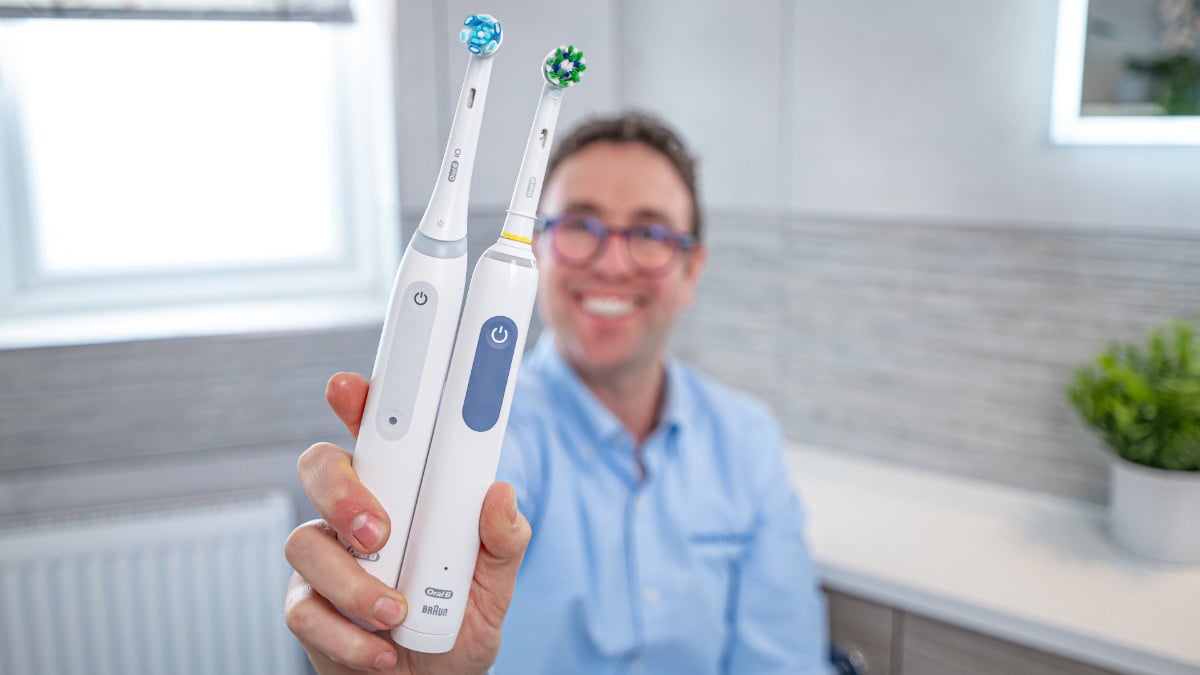
It feels solid and well-balanced
The iO3 stands upright on a countertop and doesn’t roll when laid on a flat surface.
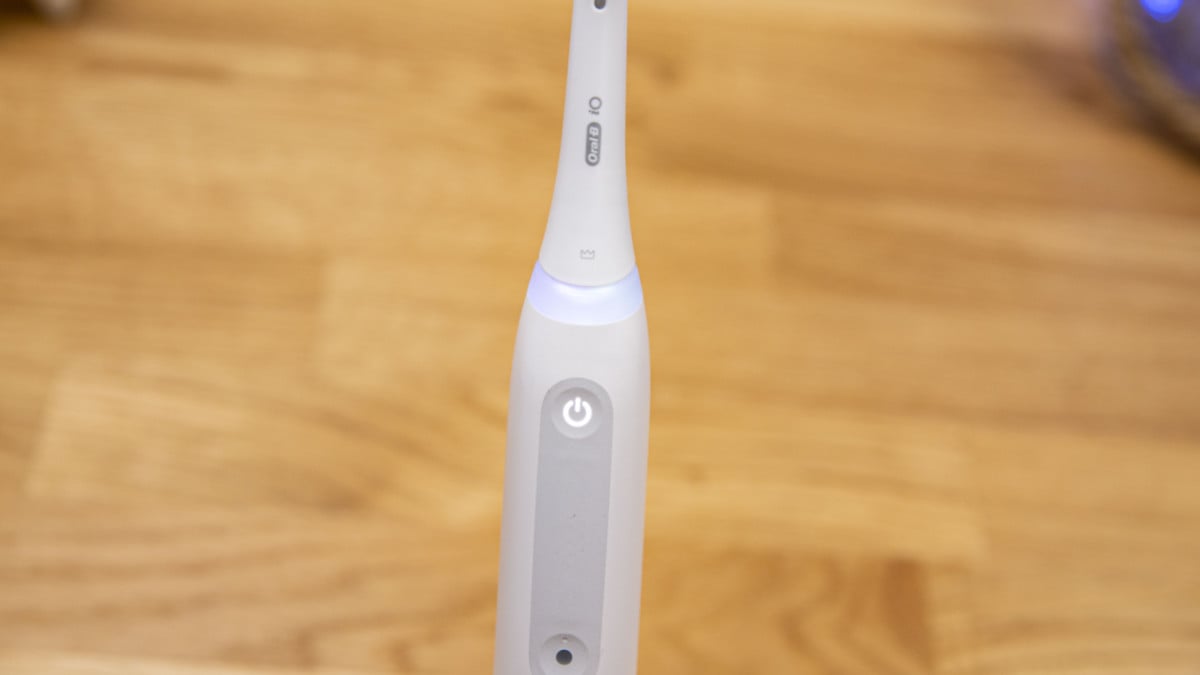
Each function button has a slightly concave shape and a different material finish to the rest of the handle, thus it's obvious to the fingertip where it is positioned.
The iO3 is available in blush pink, matte black and ice blue color options. In all instances, the brush head and charging stand are white in color.
There is an edition that comes with a basic but functional travel case to protect the handle and up to 2 heads. Vents in the case allow the contents to dry even when closed. It is my preferred choice if you can get it at a fair price.
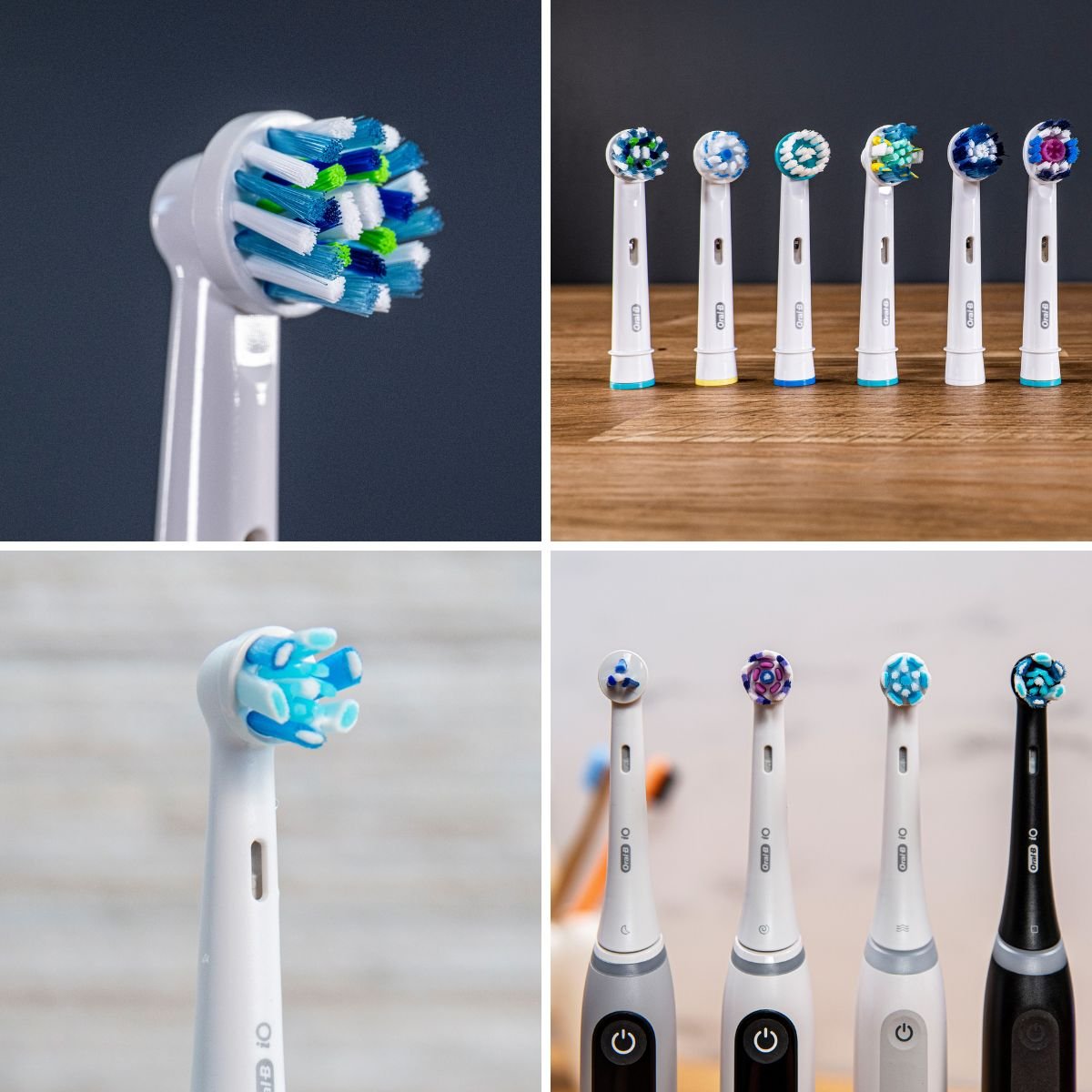
The round head is small enough to get into tight gaps, but bigger than non-iO heads
A difference that existing Oral-B brush users might notice is the size of the brush heads.
The iO heads are still fairly small and round, but they are marginally taller, which might, for a small minority, pose a bit of an issue reaching some spaces in the mouth.
I've tested the iO range extensively and I can’t say I’ve found it impacts cleaning results, but it doesn’t feel quite as nimble at getting into tight spaces. This could be worth considering if you have a very small mouth or tight gaps you need to fit the brush head into.
I would say they are about 10 percent larger than non-iO heads. They do cup the teeth more than non-iO heads thanks to their larger surface area.
Our guide on the best Oral-B brush heads look at both types in more detail.
Recommended features
Our in-house dentists don’t have the most extensive list of must have features, but the iO3 does have those that they feel are most beneficial: a pressure sensor, timer and pacer.
It teaches you how much pressure to apply
The pressure sensor implementation in the iO Series handle is one of the best enhancements to electric toothbrushes I have experienced in recent times.
Applying excessive force when you brush can be damaging to the teeth and gums, but too little pressure can result in less effective cleaning.
Without a pressure sensor, striking the balance isn’t necessarily that easy. But, with the iO3 and other iO brushes, there's a more granular notification system so that you can take corrective action and ultimately improve your oral care.
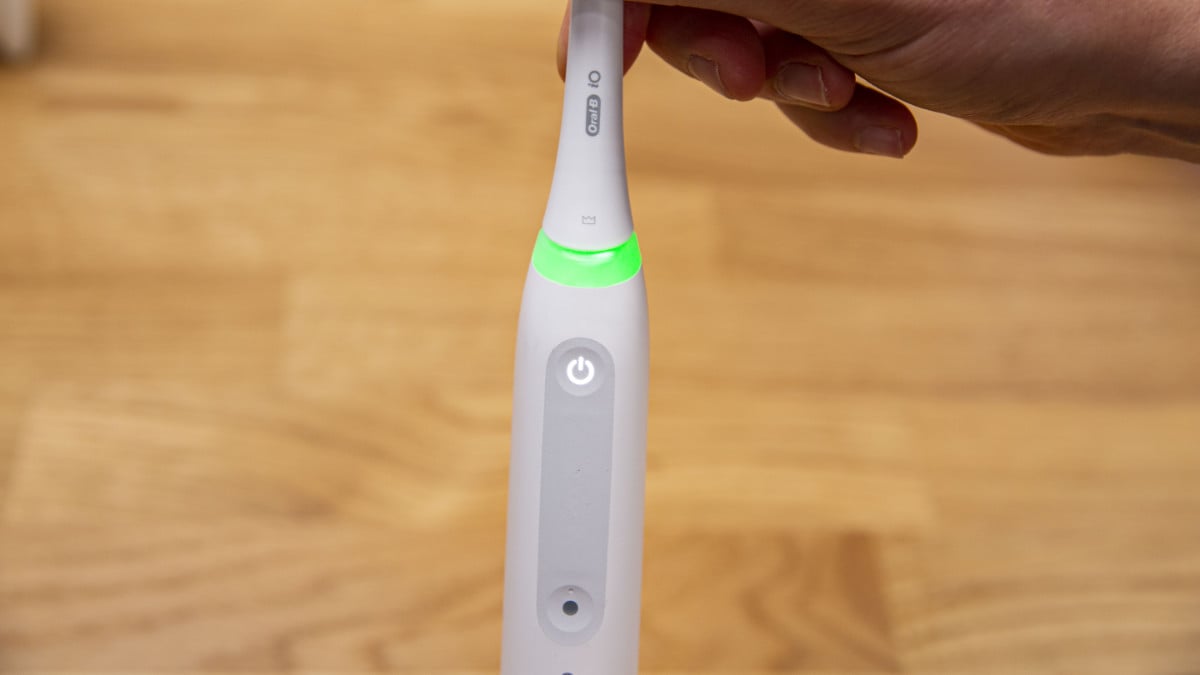
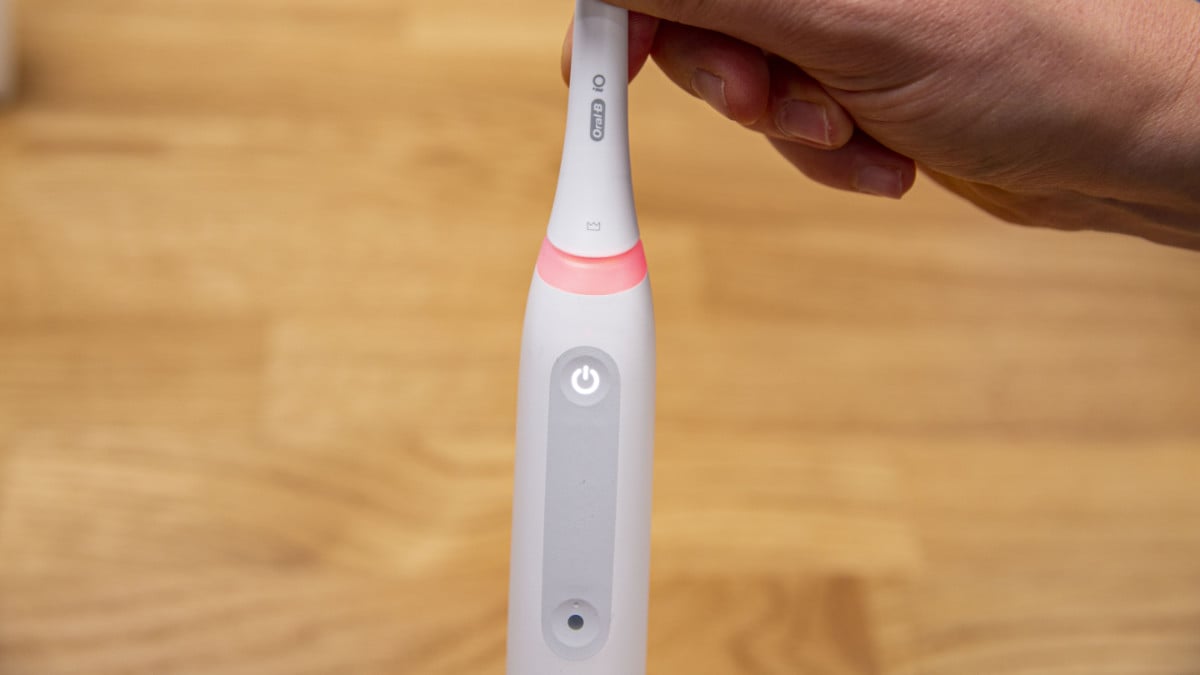
The light ring around the top of the handle changes color based on the pressure applied.
- White – low pressure: not enough force is being applied.
- Green correct pressure: the right amount of force is being used.
- Red – high pressure: excessive force is being applied and should be reduced.
Don’t worry if you press too hard occasionally. When detected, the motor will slow the brush head movements until the pressure is relieved.
If you know you have a habit of brushing with too much force, you can rectify this with the iO Series.
The pacer encourages even brushing
To achieve healthy teeth you need to give all of them equal attention, not just brush the ones at the front that are visible when you smile.
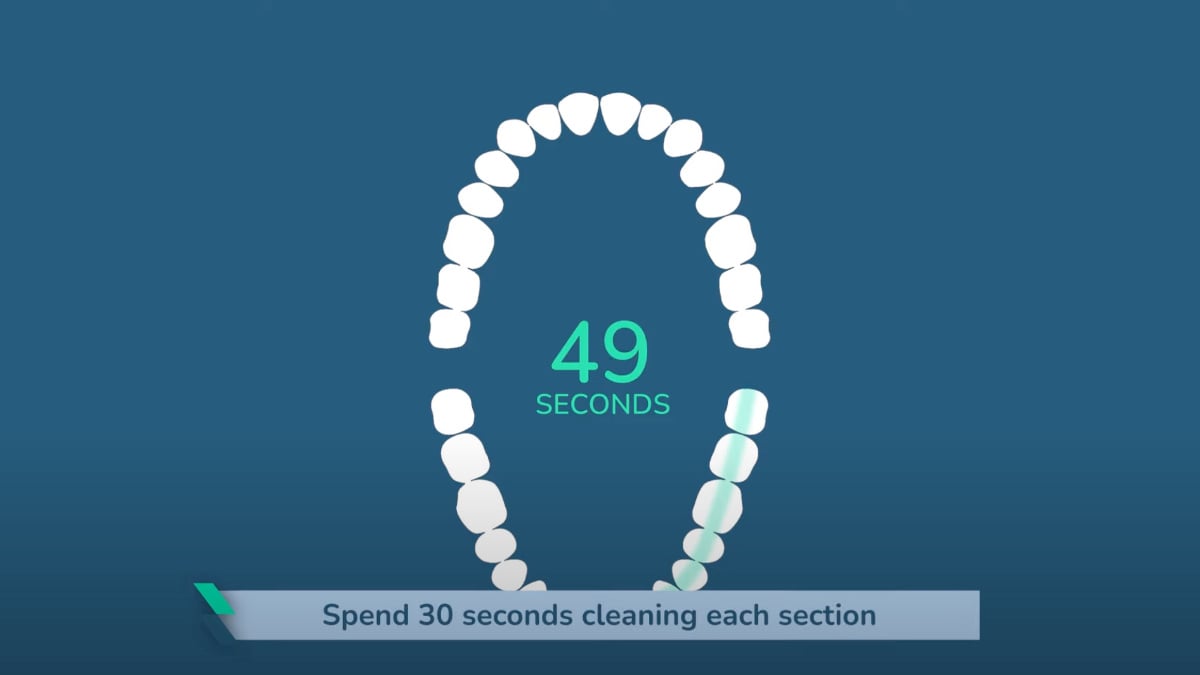
As soon as you power on the iO3, the 2 minute timer and pacer are activated. The pacer momentarily pauses the brushing action every 30 seconds to tell you to move on to the next part of the mouth. After 2 minutes the alert changes slightly to tell you that you have brushed for long enough.
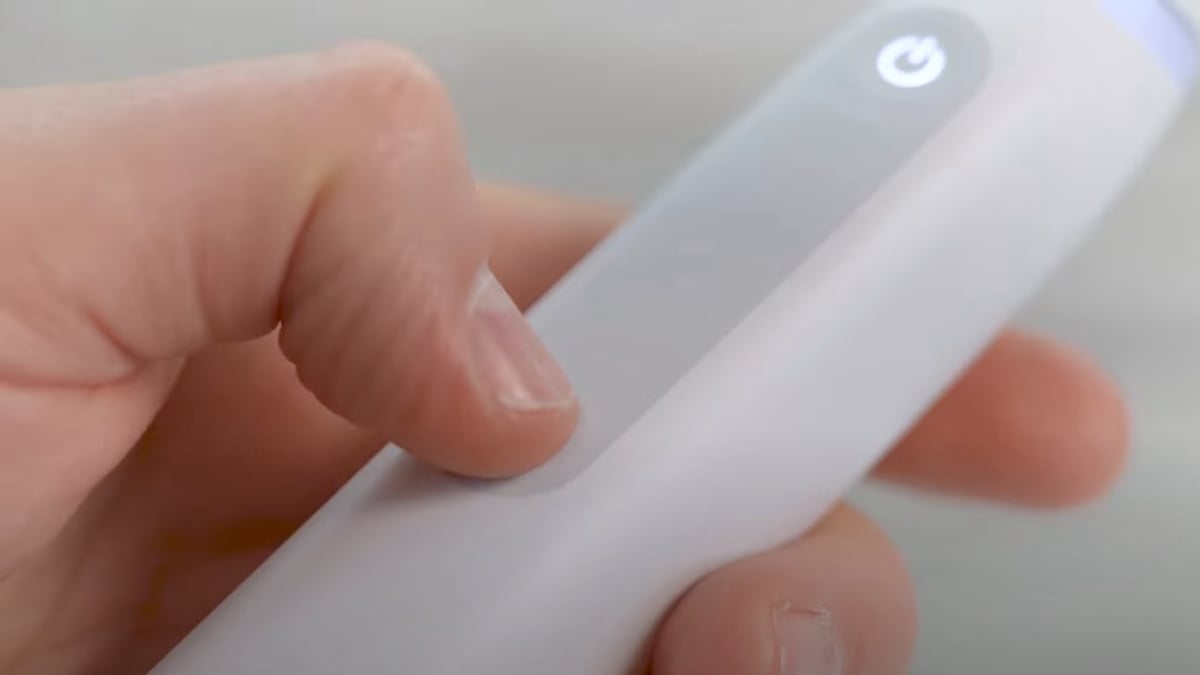
Although the minimum brushing time might have been reached, the iO3 encourages longer brushing by not powering off automatically. A simple press of the power button will turn it off.
Additional items & features
Being an entry-level brush in the iO range, the Series 3 doesn't have much beyond the key features we recommend for a good electric toothbrush. This isn't a bad thing, though, as it keeps the price down. In the sections below we comment on the additional features and considerations that do come with it.
The 3 cleaning modes are more than enough
The iO3 offers 3 different cleaning modes. This is sufficient; you don’t need more than this.
Some iO models offer as many as 7 cleaning modes. There is minimal difference between them and I have yet to see any really meaningful evidence that additional modes produce better results. Your dentist isn’t really going to be able to tell if you have been using the standard clean or whitening mode.
Over and above Daily Clean mode, if I were to seek out one additional mode, it would be a sensitive mode, Or something that is a little less powerful and a more gentle option for users who might have tender teeth and gums. The iO3 has this.
Your options are:
- Daily Clean
- Sensitive
- Whiten
Unfortunately, there is no indication from the brush handle itself as to which mode you have selected. No icons or labels. You have to remember the order.
It's not a smart toothbrush
Unlike several other iO Series toothbrushes, the iO3 is not a smart toothbrush — it doesn't have Bluetooth connectivity.
As such it does not connect to a smartphone via an app and it cannot track the position of the toothbrush in the mouth for real-time or post brushing feedback.
It is your conventional electric ‘dumb’ brush without all the extra tech. That being said, it does still have brush head replacement reminders.
The brush head replacement reminders are useful
It’s all too easy to forget when you last replaced your brush head. The recommendation is every 3 months as using it for longer can result in damage to the teeth and gums, as well as less effective plaque removal.
Thankfully the iO3 has a reminder system built-in.
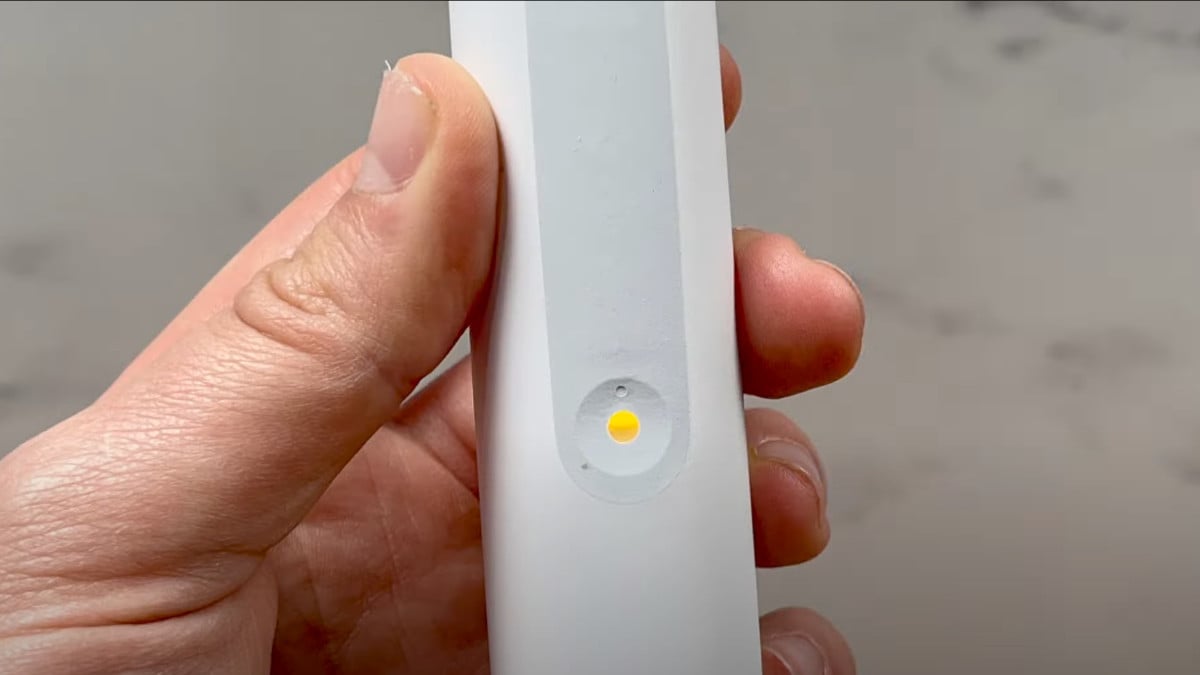
A yellow light illuminates within the mode button when a replacement is due. It’s easily reset.
If you don’t clean it, the heads can get mouldy
The water resistant iO3 brush handle can be rinsed under the faucet and even used in the shower if you so desire. It is fairly easy to keep clean.
You do want to pay particular attention to the head and neck attachment, though. Failing to do so increases the chance of mould building up.
This isn’t a problem exclusive to the iO Series, but compared to previous generations, there is a gap between the magnetic attachment and the plastic frame that offers an ideal trap and breeding ground for bacteria.
It’s not as quiet as many other brushes, but far less noisy than non-iO models
Oral-B brushes are far more noisy than most electric toothbrushes, but the iO Series handles are quieter.
On average, they operate at 10 decibels (dB) less. The iO3 registers a maximum of 64dB. But, on the sensitive mode, it was a couple of dB quieter still.
The sound is less mechanical than non-iO models. It is now a deeper humming or vibration noise. It isn’t as high pitched as most sonic toothbrushes that operate in the 60-70dB range.
In the table below we compare the iO3 to other Oral-B brushes and a Sonicare brush.
|
Oral-B iO Series 3 (iO3)
|
|
Oral-B Pro 1000
|
|
Philips Sonicare 4100 Series
|
| Noise |
|---|
| 64dB |
| 73dB |
| 60dB |

Battery performance
During my testing I found the iO3 had a reliable 18-20 day battery life. Occasionally I managed an extra day or two. This is less than some sonic toothbrushes, but not bad overall. It means you only need to charge the brush every 2 to 3 weeks if using it for the recommended amount of time each day.
This is more than satisfactory as the performance was consistent. It is a bit below the industry average of around 3-4 weeks, but better than the more premium models such as the iO9 and 10 that I have found to have inconsistent usage time, likely because of the Bluetooth features.
You get a charging stand included in the box. It isn’t the magnetic style provided with some iO models. Instead, it’s a standard white colored charger, with a protuberance on top that fits into the base of the iO3.
Hardwired into it is a 1.2 metre (4 foot) cable with 2 pin power adapter. It will recharge the battery in up to 16 hours.
An LED on the brush handle gives feedback on the charge status.
In the table below we compared the battery life of the iO3 to other Oral-B brushes and the Sonicare 4100 Series, which is similarly priced.
|
Oral-B iO Series 3 (iO3)
|
|
Oral-B Pro 1000
|
|
Philips Sonicare 4100 Series
|
| Overall Score | Hands-on battery life |
|---|---|
|
80
|
17 days |
|
75
|
10 days |
|
83
|
17 days |

Price & buying advice
The retail price for the iO3 is $80 but the average selling price of Oral-B models is often 20% less, thus around $64.
Over 3 years, the iO3 will cost in the region of $196. Compare this to the Pro 1000 at $105 and there's a saving of almost 50% to be had. In other words, the Pro 1000 costs half as much.
That being said, the Pro 1000 isn't as nice a brush and doesn't have a visible pressure sensor. It's harder to notice when its vibrating pressure sensor is activated.
It's a similar story with the iO2. It's cheaper to buy, but doesn't have the advanced pressure sensor of other iO brushes.
Previously we had recommended the Smart 1500 as an alternative to the iO3, but it has now been discontinued and the remaining stock is expensive. Unless you can find the 1500 for around $80 or less, we recommend the iO3.
Alternatively, if you like the iO Series design, but want a few more features (the brush doesn’t clean the teeth any better) models like the iO Series 6 strike the balance between price and functionality.
| Overall Score |
| How well it cleans |
| How it feels |
| Recommended features |
| Additional items & features |
| Battery performance |
| Smart features |
| Price |
| Support & reputation |
| Buying options |
|
Our Choice
|

|

|
|---|---|---|
|
80
|
75
|
87
|
|
100
|
100
|
100
|
|
88
|
76
|
88
|
|
100
|
63
|
100
|
|
22
|
20
|
53
|
|
53
|
43
|
43
|
| - | - |
68
|
|
43
|
100
|
13
|
|
77
|
77
|
77
|
Support & reputation
Having handled 9 different variants of the iO Series, I know first hand how well built they are.
The iO Series does use a newer motor and handle design that doesn’t have years and years of reliability data, but as an established player in the market, Oral-B knows a lot of the failure points and has tried to mitigate these with the iO Series.
I’ve been using the iO Series 9 since it launched in the summer of 2020 and it still functions as you would expect.
As standard, you get a 2 year warranty, but for the sake of a few minutes of registering the brush online you can gain an additional year for free. No other leading brands are doing this.
I anticipate that, like many brushes today, the iO3 could still easily be your daily toothbrush in 5 or more years; there isn’t a need for regular replacement.
With a need to move to more sustainable approaches, it is disappointing that no parts on the brush are designed to be user serviceable. Regrettably, this is common practice for electric toothbrushes.

Environmental impact
The environmental impact of electric toothbrushes is on average 11 times greater than a manual brush. This doesn’t mean that you shouldn’t use one. You need to balance effective cleaning and disease prevention against the environmental impact.
The lack of extras in the box is a good thing here. The overall shipping weight is lower, although the overall box size could potentially be reduced a little.
Because the iO3 doesn’t have a screen or Bluetooth connectivity the amount of components and e-waste is reduced too.
While Oral-B has partnered with schemes such as TerraCycle in some countries, it does not yet have its own recycling scheme for used brush heads or faulty products.
Its brush heads are made from petroleum-based plastic, which uses up the planet’s finite resources compared to using plant-based plastics.
Conclusion: premium pressure sensor, iO styling and more wallet-friendly
Benefiting from our dentist recommended features, the iO3 is a great toothbrush. Used correctly you get brilliantly clean teeth. I could happily use this on a daily basis.
Price is the sticking point here.
Although the most affordable iO model, it is far more expensive than other Oral-B brushes that clean the teeth comparably. It’s primarily a consequence of the iO specific brush head pricing.
If you are not worried about getting the absolute best value for money, then I know you won’t be disappointed with the iO3.
Video review
In the video below you can see my hands-on testing of the Oral-B iO3 and my experience of using it.

Size guide
- Toothbrush height with head - 24cm / 9.5 inches
- Toothbrush height without head - 18.3cm / 7.2 inches
- Width - 2.8cm / 1.1 inches
- Depth/thickness - 2.8cm / 1.1 inches
- Weight with head - 136g / 4.8oz
- Weight without head - 127g / 4.5oz
- Package weight - 439g / 15.5oz
Noise
- 64dB
Country of manufacture
- Germany (handle & brush head)
More Oral-B iO content
In case you hadn't noticed, the Oral-B iO range now includes several models.
We explain the differences in our Oral-B iO comparison.
We've also reviewed each brush individually:

I just bought this based on your review, and you really undersell how much of an issue it is that it doesn't tell you what mode it's in! You said there wasn't an icon, but that's not the issue. There's literally no way to know what mode it's in. I've been trying to contact their customer support to ask how you tell, but they never answer their webchats or their phone support.
I'm really disappointed in this product, and probably going to return it (which I feel terrible about, because I know there's basically zero chance it will ever be resold).
Hi Michael.
Sorry to hear you feel this way. Whilst it isn't easy I have found I can tell the difference and have gotten used to it after a few days.
The modes run in the following order:
Daily Clean
Sensitive
Whiten
Whiten has more of a revving sound. With a pitch that fluctuates up and down whereas the others have a more consitant sound.
I demonstrate some sound differences in this video: https://www.youtube.com/watch?v=Zkwr3DEcKX0
Hi Jon,
I just bought the Io3 brush, and I’m completely confused - how can I objectively tell which mode is actually active right now? And in what order do the modes switch when I press the button?
The order of the modes are:
Daily Clean
Sensitive
Whiten
It will default to the mode used last when the brush was powered off. Often that is Daily Clean.
It is tricky to tell the difference between modes, but this video may help.
In a webchat Oral B stated the iO series 3 cannot be reset. They also stated it restarts in the last mode used. They did agree it was hard to identify which exact mode the user had selected unless they are very careful to count the number of times the mode button is selected. They also stated holding the power button down for about 10 seconds until it turns off, puts it into travel mode. As I understand it, The series iO6 is the first iO series brush to display the mode on the toothbrush.
Hi James.
The iO5 is the first iO Series brush to display the mode on the toothbrush. It has backlit icons rather than icon & text like the display on the iO Series 6.