





What the cleaning experience is like and how clean our teeth felt after brushing.
How well it cleans Score SummaryWhat the brush is like in-hand; how grippy it is, what the balance is like, how easy it is to remove brush heads.
How it feels Score SummaryDoes the brush have our recommended features of a timer, pacer & pressure sensor and how well do they perform?
Recommended features Score SummaryHow long does the battery last, how long does it take to charge and does the brush have a battery level indicator?
Battery performance Score SummaryWhat are the total ownership costs over the space of several years and how expensive are replacement brush heads?
Price Score SummaryHow easy is it to clean the brush, how noisy is it, does it come with a travel case or any other useful items?
Additional items & features Score SummaryHow long is the warranty, what is the manufacturer's reputation and how strong are its environmental efforts?
Support & reputation Score SummaryApplies to smart toothbrushes only. How well does the smart technology work and how useful is the app?
Smart features Score SummaryOur verdict


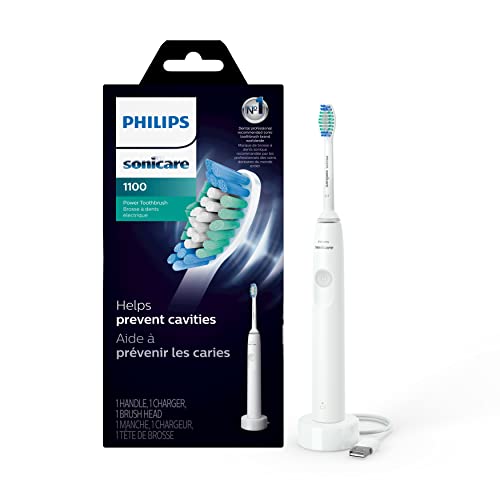
Competitively priced, the 1100 Series is the best Sonicare toothbrush if you're on a tight budget.
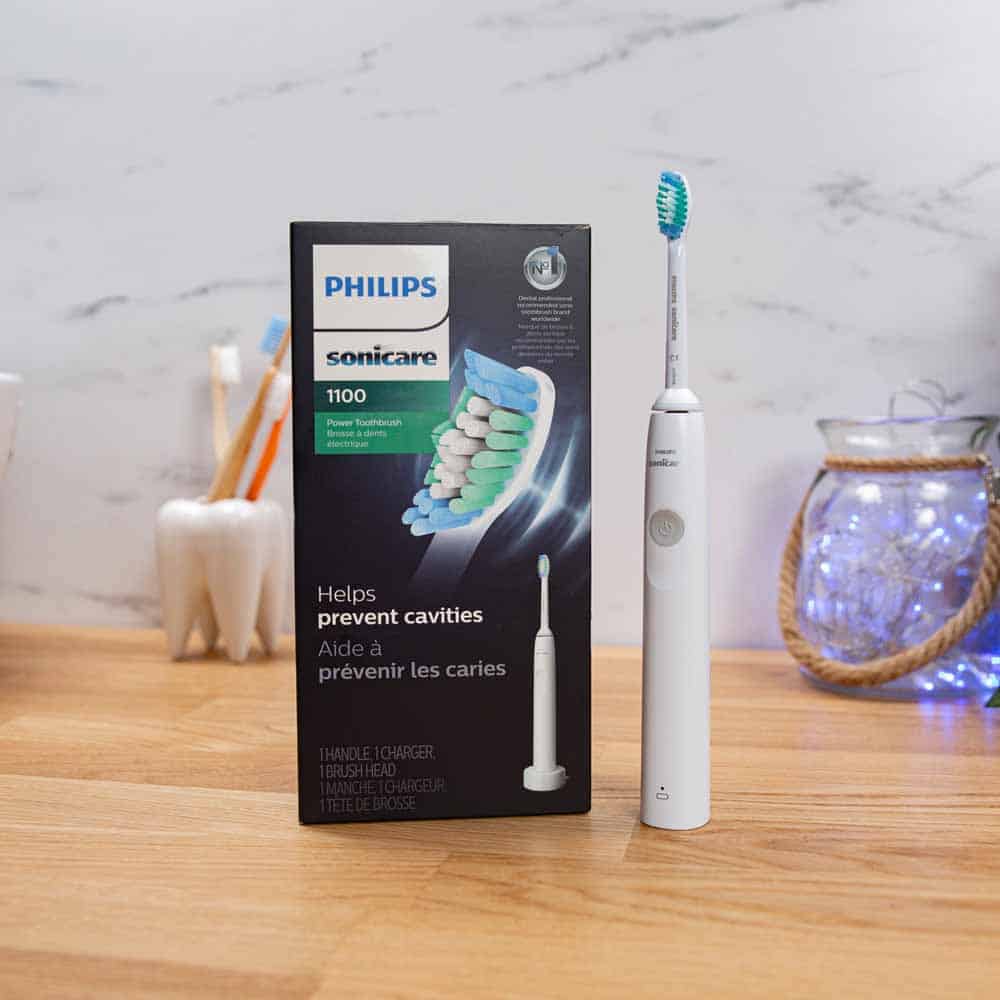
The slim handled brush cleans the teeth well. It boasts a 2 minute timer and pacer, which are essential features of any good electric toothbrush.
The biggest downside is that it lacks a pressure sensor, which is a useful feature for preventing you from brushing too hard.
Pros |
Cons |
|---|---|

1 cleaning mode makes it nice & simple to use |

No pressure sensor to alert you when brushing too hard |
|
Slim handle design – stylish & easy to keep clean |
USB charger makes it less convenient for some |
|
USB charging stand makes it more convenient for some |
Sonic motor configured differently to premium models |
Affordable with few compromises
The $25 retail price is what you’re going to have to pay for the 1100. Discounts are unlikely. It’s a very fair price for what’s on offer and why it’s our top choice Sonicare electric toothbrush for those on a budget.
Replacement brush heads cost around $8 each. This makes the 3 year ownership total about $113.
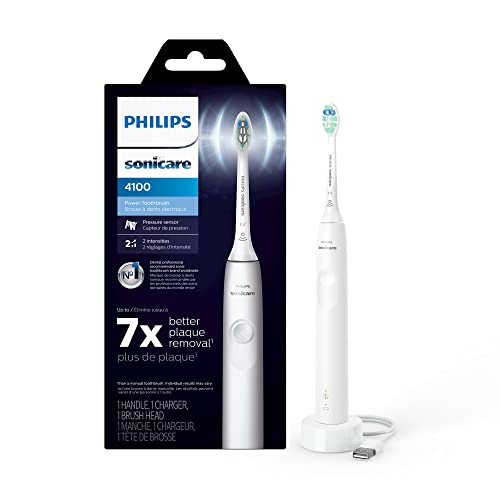
It’s not bad, but our top recommended electric toothbrush, the Sonicare 4100 Series works out less than $10 more and has the pressure sensor the 1100 lacks.
Cheaper heads are available if you buy generic off-brand options. They are not made by Philips but are compatible with the 1100 Series. You can save $3+ per head on average.
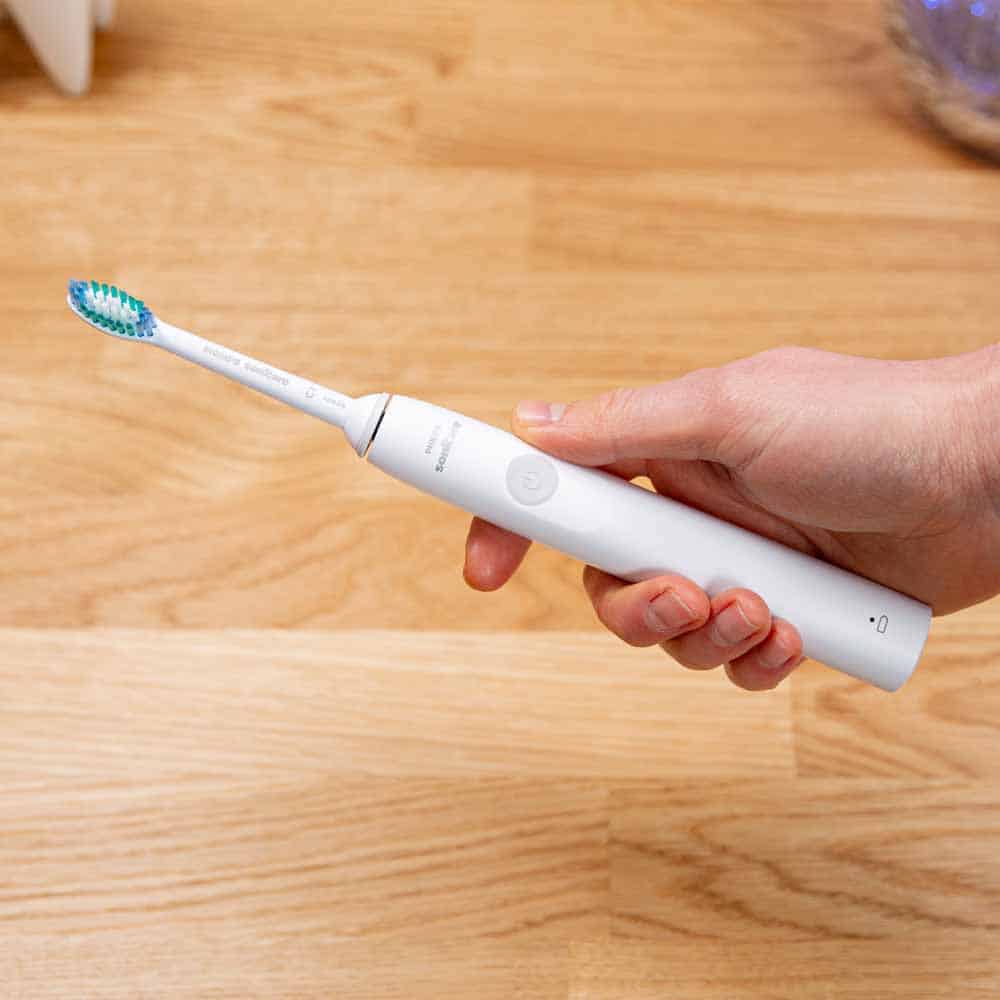
One button, one mode: it’s all you need to achieve clean teeth
Simple and less complicated is often better. The 1100 is just this.
A single press of the button on the handle is all that is needed to get brushing.
The concave rubber button is easily detected with the power icon embossed on it. Not too firm, each time it is pressed you get reassuring feedback including a clicking noise.
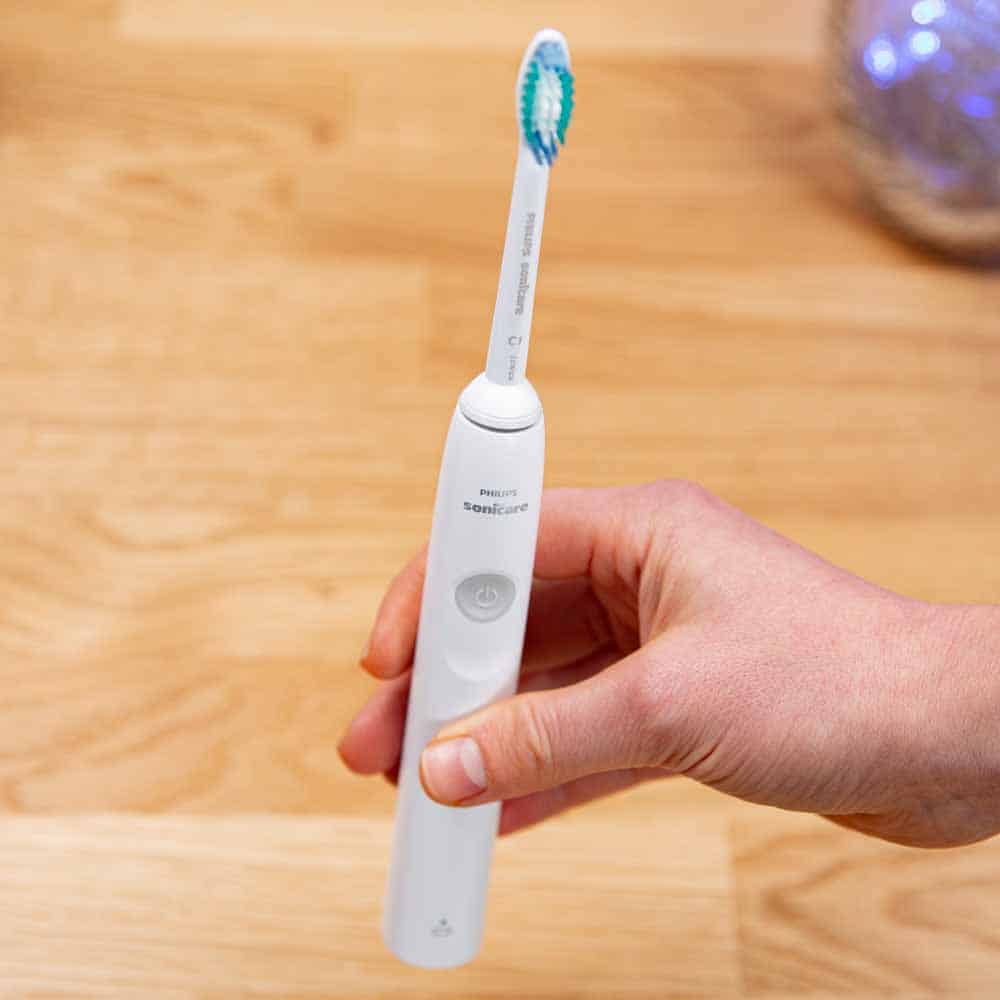
The ‘Clean’ mode is perfectly sufficient for the vast majority of users.
Lasting for 2 minutes the sonic brush head gives a good overall clean. I am perfectly satisfied with the results.
Different styles of Sonicare brush heads are available and compatible with the 1100 Series. You’ve got a choice if you desire such, but the ProResults/SimplyClean is one of our preferences. You don’t need to worry about getting a specialized head to whiten the teeth for example.
BrushSync technology that alerts you when to replace your brush head is not available on the 1100. This is reserved for the 3100 Series and other premium brushes. You’ll need to remember to replace the head every 3 months.
If you have a small mouth, a sonic toothbrush might not be right for you. The oval heads tend to be larger than the oscillating-rotating counterparts from Oral-B.
It’s less powerful than most sonic brushes but still cleans well
The motor that moves the bristles of the brush head is tuned differently to the motors found in premium Sonicare models. It doesn’t achieve the 62,000 movements of some of Sonicare's more expensive brushes.
It means the 1100 doesn’t offer quite the same intensity and deep clean feeling when in use. But, unless you have used a Sonicare toothbrush before, you’d have no reason to question it. The sonic vibrations give a thorough and clean feeling.
Cleaning results are not impacted. They are most definitely comparable.
It does appear to make the brush quieter in use. It’s audible hum is just 57 decibels. Quieter than many other sonic brushes, great if you don’t want to disturb others.
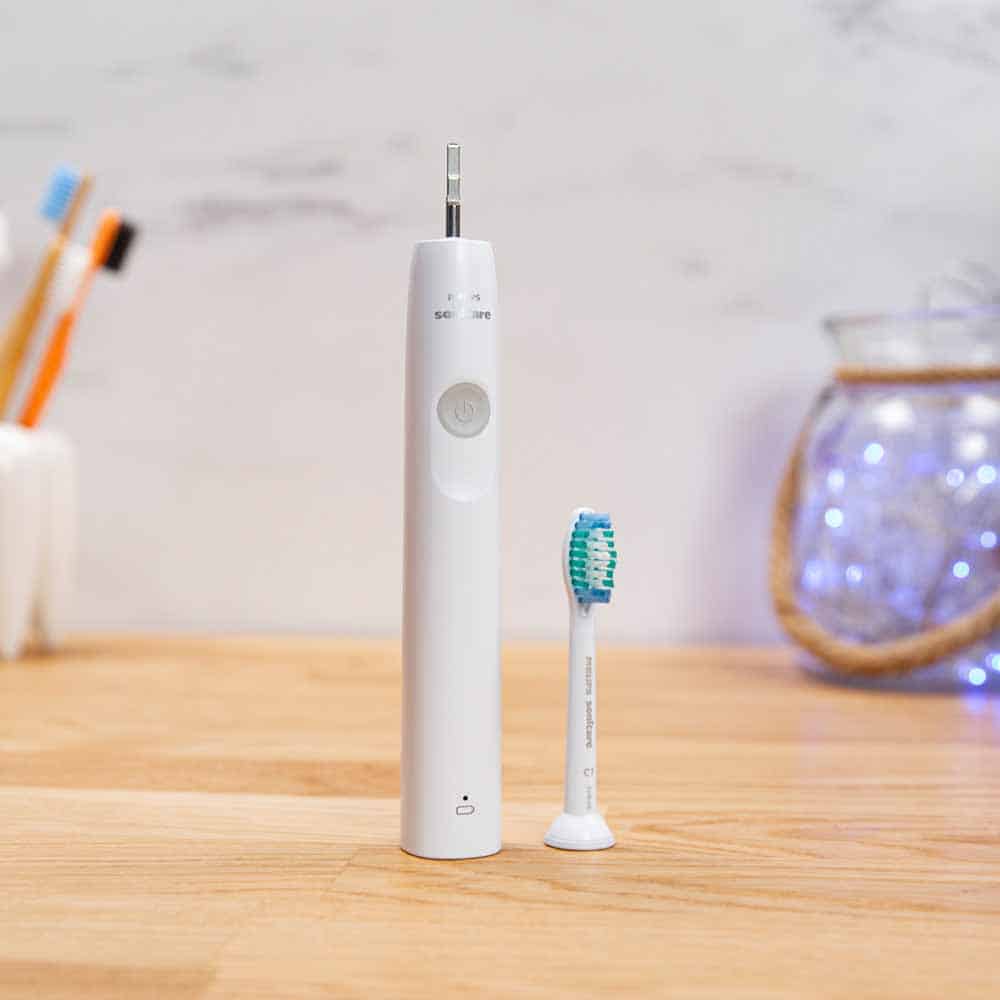
It’s got a 2 minute timer and pacer to help you brush evenly
If you turn the 1100 Series off yourself, you haven’t brushed for long enough. This is because it turns itself off automatically when the 2 minute cleaning cycle is complete.
With average brushing times being just 45-70 seconds per day, the timer is a great motivator to brush for longer for the benefit of your oral health.
Maximum benefit is gained when you brush all the tooth surfaces evenly. A pacer built into the 1100 will at 30 second intervals pause the bristle motion. Creating a change in sound and brushing sensation, this is your cue to move between the 4 sections of the mouth until all have been brushed.
The timer and pacer are 2 essential features of any good electric toothbrush.
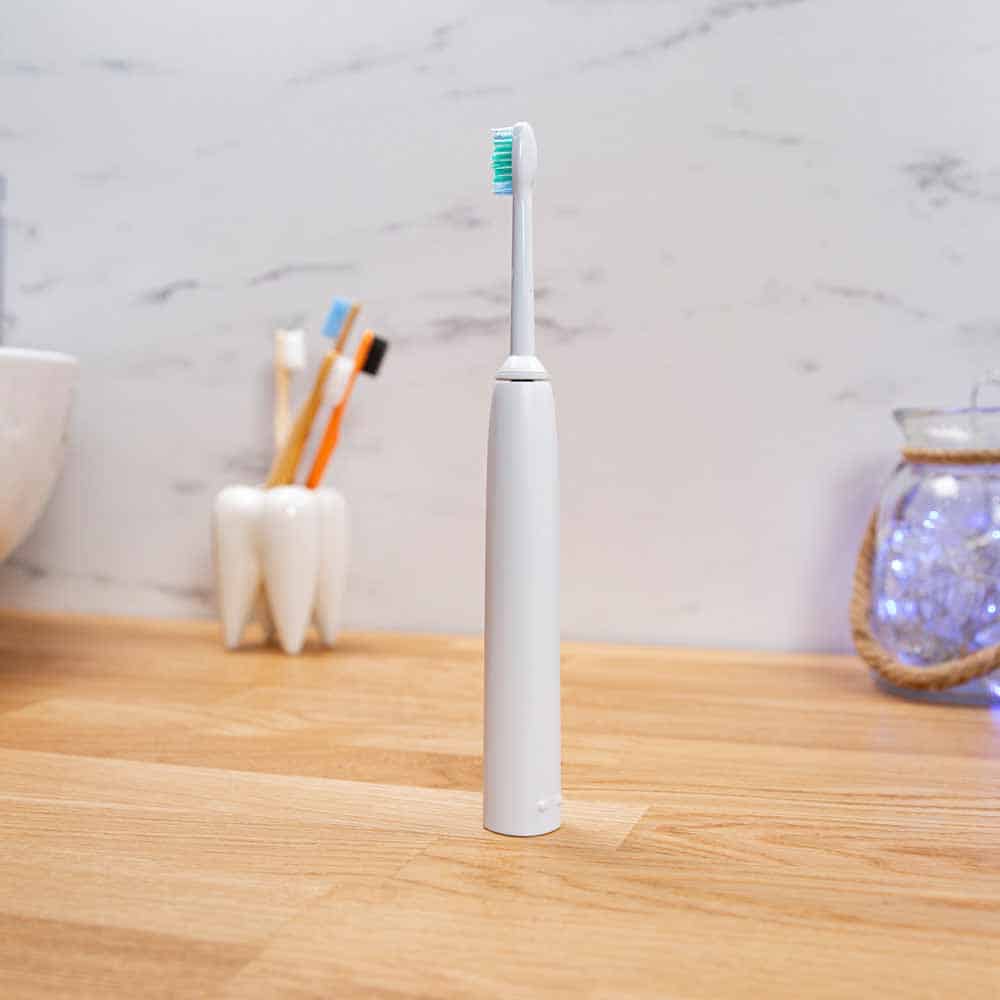
It lacks the protection of a pressure sensor
The 1100 Series does not have a pressure sensor built in. This means that you are not alerted in any way should you scrub the teeth too hard as you brush. Forceful brushing will in the long term damage teeth and gums.
Pressure sensors often don’t feature in the cheapest of toothbrushes. You don’t need it to brush your teeth well, but it's a dentist recommended feature. More brushes now do include them than in times past. If you know you like to brush hard and fast you should seriously consider the 3100 Series, which has a pressure sensor.
Slim and stylish
I’ve handled brushes more expensive than this that look and feel worse.
Durable and quality feeling in the hand
It isn’t a perfect cylinder, instead, there is slight squaring to the edges that makes it feel more secure in hand. Given the lack of different textured surfaces, this is welcomed.
Slimmer and lighter (3.45oz) in the palm than previous cheap Sonicare brushes it’s pleasant to use and doesn’t result in the same arm fatigue you might get with other heavier handles.
Available as a white colored handle only the matt finish to the plastic is resistive and more pleasing to the eye than the glossy finish of many competitor's products.
The 1100’s handle is easy to keep clean and because it is water resistant, can be rinsed under the tap or used in the shower if you prefer.
A firm squeeze of the handle doesn’t result in any dubious sounding creaks or groans from the plastic. It feels well made and looks good.
Daily usability is improved as the toothbrush can stand upright on a countertop and has been designed not to roll too much when laid flat.
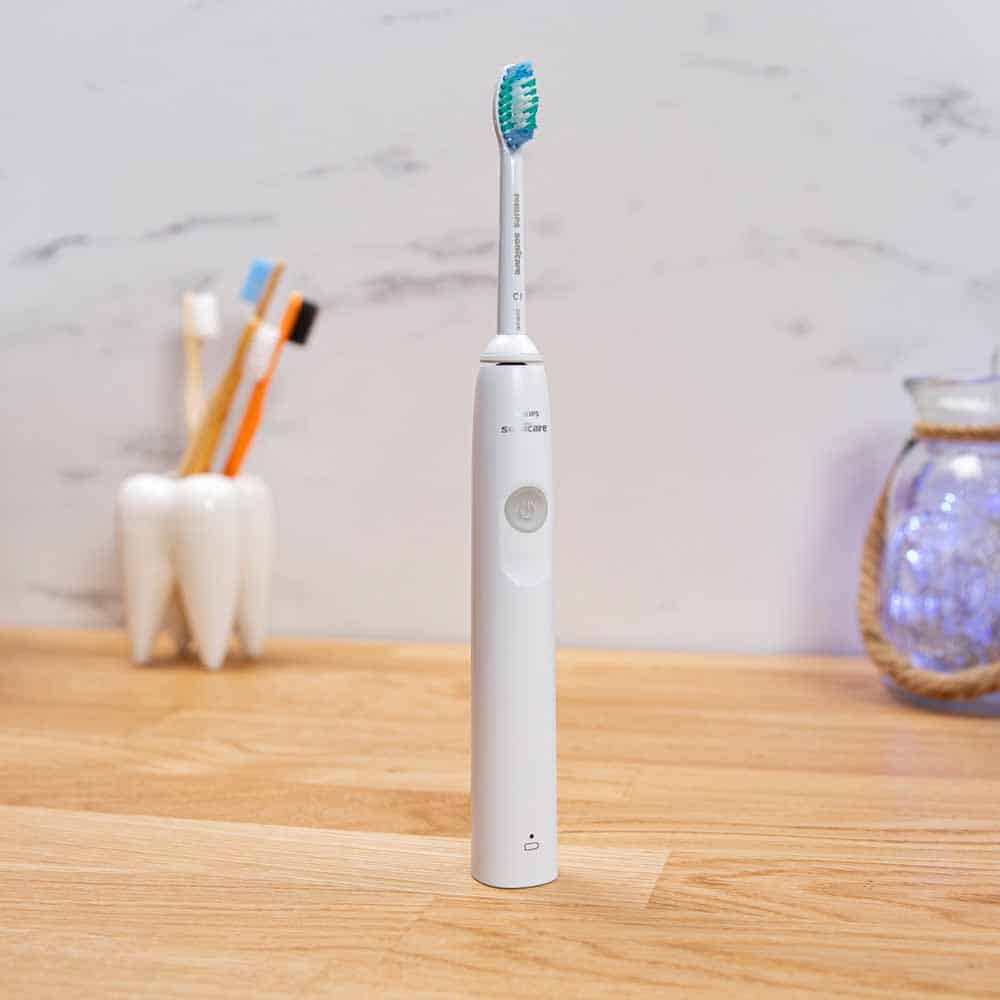
The 2 week battery life is adequate but not amazing
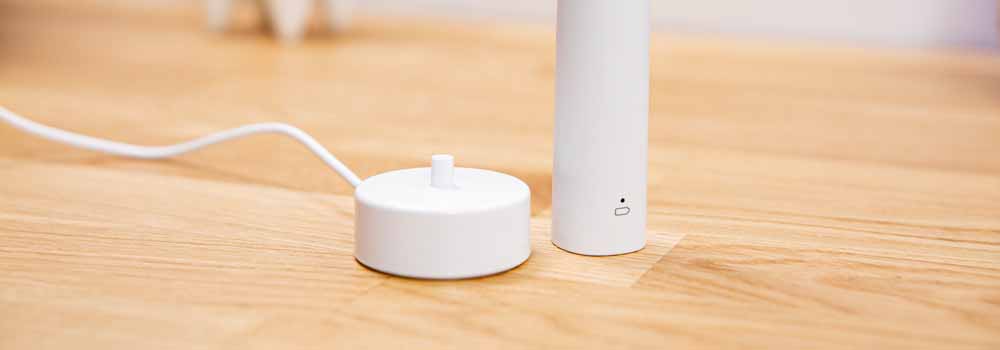
A rechargeable Lithium-Ion (Li-Ion) battery is sealed inside the 1100’s handle.
Philips claims 14 days of use on a single charge, but I’ve been able to achieve a respectable average of 17.
Premium Sonicare models often deliver even better usage times, more in line with the 3-4 week average. The poorer performance here isn’t a deal breaker unless you travel or are away from power regularly.
The benefit is a slim handle and a battery charge notification LED. Not always available on affordable toothbrushes it gives you an alert when the brush needs charging.
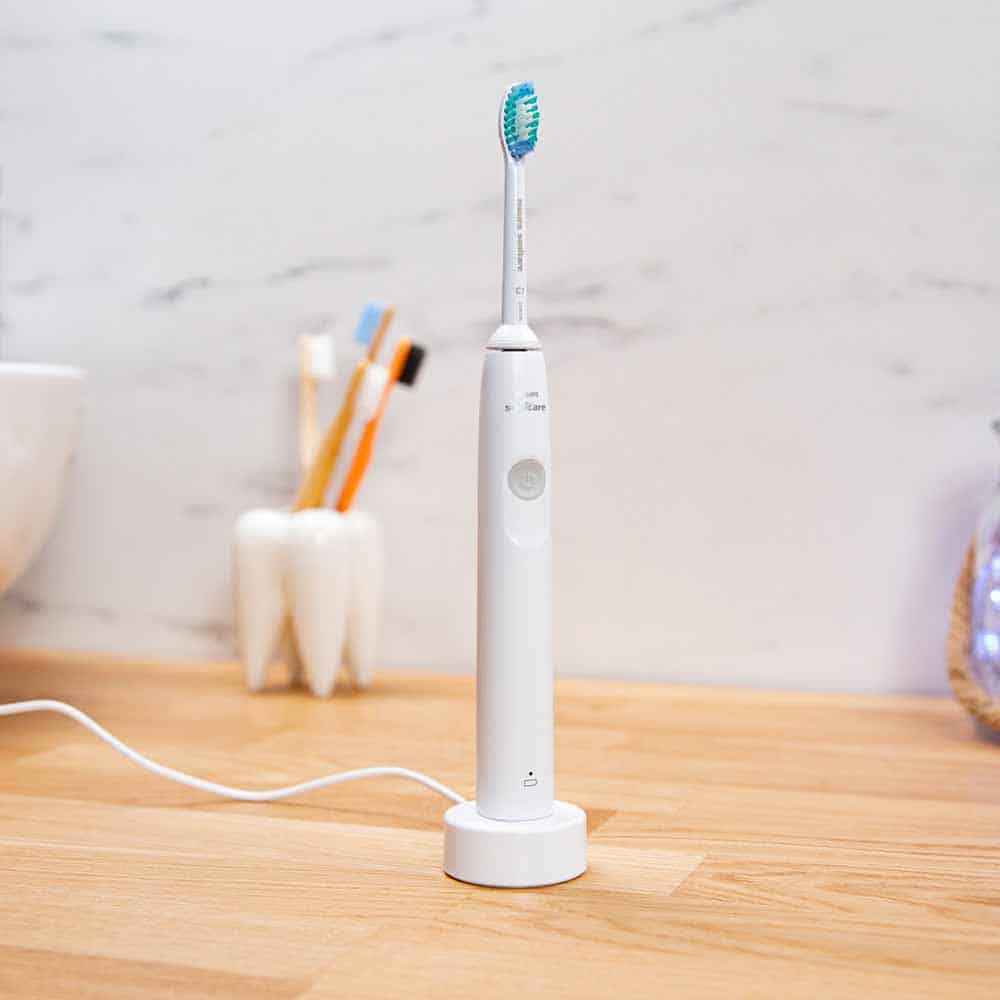
USB charging has some advantages
Recharging takes a maximum of 24 hours on the supplied stand.
A new slimmer, circular design, there is a 43 inch (110cm) USB cable hardwired into the stand. It doesn’t have nor come supplied with a 2 pin power adapter.
Excluded for environmental reasons, I know some will be frustrated you don’t get one included.
Many of us now have 2 pin USB adapters such we can use to connect the 1100 to a power outlet. You probably have one you use for your smartphone or powering other gadgets.
Increased versatility is enabled though as being allows the brush to be charged from a computer, battery bank or USB wall socket if you choose.
2 year warranty included as standard
An industry average 2 year warranty against defects and workmanship is provided.
Budget brushes like the 1100 can often come with compromises. Thankfully reliability doesn’t appear to be one that applies. It seems well built with no reason to suggest it wouldn’t last a good few years.
Disappointingly, in an era where environmental impact is important, the 1100 has no serviceable parts. There is no ability to undertake a repair without rendering it useless.
Environmental impact
Electric toothbrushes have an impact 11 times greater than a manual brush on average.
The 1100’s impact is likely to be similar to the average electric brush, as it doesn’t boast lots of extra resource hungry features such as RFID enabled brush heads and smart technology. Impact is further reduced by excluding a 2 pin power adapter. But at odds with this is the lack of repairability and the fact that the handle and stand come wrapped in plastic.
Where some manufacturers now use plant based plastics, Philips heads primarily use petroleum based, thus using more of the finite resources,
Philips has partnered with schemes such as TerraCycle in some countries, but doesn’t have its own scheme.
Conclusion: affordable simplicity
If you are on a tight budget and want a toothbrush from a leading brand, the 1100 Series is a good choice. The main downside is the lack of a pressure sensor.
It looks good, cleans the teeth well, and has 2 of the 3 dentist recommended features. It is our budget choice from the Sonicare range.
Video
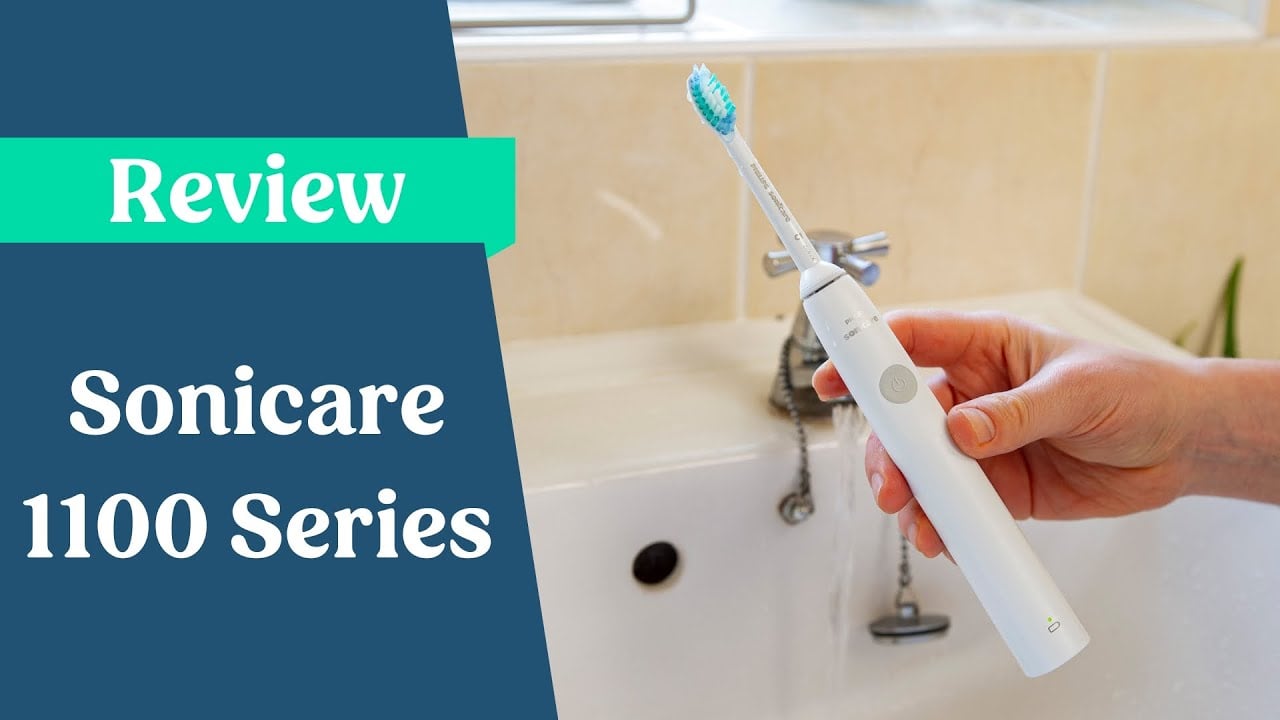
You can find out about my hands-on testing and experience with the Sonicare 1100 Series in the video below.
Size guide
- Toothbrush height with head - 23.5cm / 9.4 inches
- Toothbrush height without head - 17.5cm / 6.9 inches
- Width - 2.6cm / 1 inches
- Depth/thickness - 2.6cm / 1 inches
- Weight with head - 98g / 3.4oz
- Weight without head - 92g / 3.3oz
- Package weight - 255g / 9oz
Noise
- 57dB
Country of manufacture
- China

Why do you conclude that the 4100 toothbrush cleans much better than the 1100 (100% vs 69%)? Both use the same heads, and are both limited to 31,000 cps, right?
Hi Larry.
The amplitude of the 4100’s motor has been tuned to provide a more intense cleaning action, despite the same number of brush strokes. Whilst the actual plaque removal results show litte to no difference, the 4100 gives a satisfaction to the cleaning experience that most would prefer. It might be psychological but we gain a deep clean feeling which is ultimately more satisfying.
Further comparison of the 2 models can be found in this post.